In Brain News, Campaign News, Charity News

Scotland’s medicines regulator has approved the first targeted therapy for low grade brain tumours in a generation. brainstrust calls on England to address the inequity of access to Vorasidenib.

Scotland’s medicines regulator has approved the first targeted therapy for low grade brain tumours in a generation. brainstrust calls on England to address the inequity of access to Vorasidenib. The Scottish Medicines Consortium (SMC) today confirmed that Vorasidenib (Voranigo) will be available on the NHS in Scotland for adults and young people aged 12 and over with IDH-mutant grade 2 astrocytoma or oligodendroglioma following surgery, where immediate chemotherapy and radiotherapy is not required.
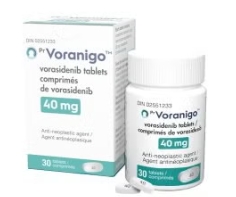
The decision makes Scotland the first nation in the UK to offer this medicine routinely on its health service. For people living with a low-grade (grade 2) brain tumour, today’s news is the moment many have been waiting for. After surgery, people have faced a stark choice: active surveillance to monitor when the tumour changes or accept the burden of radiotherapy and chemotherapy and all the neurologic and neurocognitive consequences that these treatments bring. Vorasidenib changes this. Clinical trial data from the INDIGO study 1 showed it nearly tripled the time people went without disease progression – a medium of 27.7 months compared to 11.1 months on placebo – while helping to shrink tumour volume and delay the need for further treatment. In addition, the results of a follow up study 2 published Oct 25 report the positive effect of Vorasidenib on tumour growth rate, health-related quality of life (HRQOL), neurocognitive function and seizure control. Dr Helen Bulbeck, director of policy and services at brainstrust, said

“This is a genuinely historic day for people in Scotland who are living with a low-grade brain tumour. For the first time, there is a targeted treatment that can actively slow tumour growth without the long-term harms of radiotherapy or chemotherapy. brainstrust has advocated for access to Vorasidenib since the INDIGO trial data emerged, and we are proud to have been part of the process that got us here. “But our celebration is tempered by real concern for patients in England. The NICE appraisal has been paused, and access is unlikely before the summer at the earliest. That is months more of living with a growing tumour, months more of uncertainty. We urge NICE and NHS England to move without delay.”

England: a widening postcode lottery

Vorasidenib received marketing authorisation from the UK medicines regulator, the MHRA, in September 2025. Scotland’s SMC, working under its PACE process for rare conditions, has now completed its evaluation and accepted the medicine. In England NICE’s draft guidance– published in October 2025 – recommended against routine use on cost effectiveness grounds. The appraisal was subsequently paused in January 2026, at the manufacturer’s request, to await the introduction of the revised NICE thresholds in April 2026. New draft
guidance is expected on 29 April 2026. Even under an optimistic scenario, NHS England would not be required to make the treatment available until July 2026 at the earliest. For the estimated several hundred patients in England who are eligible right now, this means a period of unequal access within the same country. For those patients, today news brings hope but not yet relief. brainstrust believes they deserve better, and sooner.

The patient voice that helped this happen
This decision was not reached by evidence alone. Central to the SMC’s process is a Patient and Clinician Engagement (PACE) meeting, at which people living with brain tumours and their families have the opportunity to share with the committee directly what life with this diagnosis feels like – the fear of a tumour that will progress, the toll of waiting, the impact on work, relationships and identity, the loss of life’s purpose and what access to a new
treatment would mean. brainstrust was proud to collaborate with the IBTA in its submission and we acknowledge
and thank everyone who contributed to this process – those who submitted evidence, participated in engagement meetings, responded to surveys, and who had the courage to put their experiences on record to help strangers understand with it means to live with a low grade brain tumour. Their voices were not a footnote; they mattered to the outcome.

Will Jones, CEO, brainstrust comments ““Decisions like this do not happen in a vacuum. They happen because people who are living with these tumours – and the people who love and care for them – are willing to speak up about the impact it has on their lives. The SMC process takes that seriously and as do we at brainstrust. Patient involvement is not a box ticking exercise; it is how good decisions are made. It shapes the decisions that shape people’s lives.’

About IDH mutant low-grade glioma
Grade 2 astrocytomas and oligodendrogliomas are slow growing but incurable brain tumours that disproportionately affect people in their twenties, thirties and forties – people building careers, raising families, making plans. The presence of IDH1 or IDH2 mutations, found in the majority of these tumours – defines both the disease biology and treatment response. Until Vorasidenib, no targeted therapy had been approved for this population anywhere in the world. After surgery, the standard of care was active surveillance: regular scans, and waiting for the tumour to transform, caught between a rock and a hard place of whether to proceed with chemotherapy and radiotherapy, which come at a cost to quality of life. So always living in the shadow of a treatment they hoped to delay but could not avoid.

1 1Mellinghoff IK, van den Bent MJ, Blumenthal DT, Touat M, Peters KB, Clarke J, Mendez J, Yust- Katz S, Welsh L, Mason WP, Ducray F, Umemura Y, Nabors B, Holdhoff M, Hottinger AF, Arakawa Y, Sepulveda JM, Wick W, Soffietti R, Perry JR, Giglio P, de la Fuente M, Maher EA, Schoenfeld S, Zhao D, Pandya SS, Steelman L, Hassan I, Wen PY, Cloughesy TF; INDIGO Trial Investigators. Vorasidenib in IDH1- or IDH2-Mutant Low-Grade Glioma. N Engl J Med. 2023 Aug 17;389(7):589- 601. doi: 10.1056/NEJMoa2304194. Epub 2023 Jun 4. PMID: 37272516; PMCID: PMC11445763. 2 Cloughesy TF, van den Bent MJ, Touat M, Blumenthal DT, Peters KB, Ellingson BM, Clarke JL, Mendez J, Yust-Katz S, Welsh L, Mason WP, Ducray F, Umemura Y, Nabors B, Holdhoff M, Hottinger
AF, Arakawa Y, Sepulveda JM, Wick W, Soffietti R, Perry J, Giglio P, de la Fuente M, Maher E, Bottomley A, Tron AE, Yi D, Zhao D, Pandya SS, Steelman L, Hassan I, Wen PY, Mellinghoff IK; INDIGO trial investigators. Vorasidenib in IDH1-mutant or IDH2mutant low-grade glioma (INDIGO): secondary and exploratory endpoints from a randomised, double-blind, placebo-controlled, phase 3 trial. Lancet Oncol. 2025 Oct 29:S1470-2045(25)00472-3. doi: 10.1016/S1470-2045(25)00472-3. Epub ahead of print. PMID: 41175888.

Introduction

The Brain Tumour Data Dashboard lets you explore up -to-date, population level data about the brain tumours diagnosed in England between 2013 and 2015. Using the drop down menus on the left you can select different groups of patients to view in the charts below. In these charts the number of patients for every 100 diagnoses is displayed as images of people. Patients have been grouped by date of diagnosis, type of tumour, age, gender, and region in England.

For each group of patients you can explore the different routes to diagnosis, the proportion of those who received chemotherapy or radiotherapy, as well as the survival of the patients within each group. For more information about what these metrics mean please see the glossary.

How to use

  1. Select the year of diagnosis using the drop down menu.
  2. Select your patient group of interest from the four drop down menus in the following order:
    1. Tumour group
    2. Age at diagnosis
    3. Region of England
    4. Gender of patient
  3. To view a second chart to compare different groups of patients, click the ‘compare’ button.The second chart will appear below the first chart.

*Note that the tool is best used on a laptop or tablet rather than a mobile phone*

Unavailable data

Some of the data in these charts is not available.There are two main reasons for this:

  1. How the data has been grouped

If you cannot select a patient group from the drop down menus, the data is unavailable because of how the data has been organised.

Public Health England has grouped the data like a branching tree. The bottom of the tree contains all the patients with brain tumours, and then each branch divides the data by a certain characteristics, like age, or location of tumour. But the data is divided in an order, starting with location of the tumour (endocrine or brain), then by age, region, and gender. Age is at the start because it makes a bigger difference to survival rates and treatment rates than gender or region. Sometimes, after the data has been split by type of tumour and age, there is not enough data to be split again. This is because to protect patient confidentiality groups cannot contain less than 100 patients. Because some groups cannot be split further, you cannot create ‘totals’ for everyone by region or gender. For example, you cannot see results for all ages by region, or all brain tumours by gender. If these totals were calculated and released, it might be possible to identify patients, which is why Public Health England cannot release this data.

  1. Statistical reasons and data availability

If you can select a patient group from the chart menus, but the chart does not display, the data is unavailable for one of several reasons:

  1. Data is not yet available for the selected year from Public Health England.
  2. Data is not available because the data quality is too poor to release this statistic.
  3. Data is not available as the statistic is not appropriate for this group.
  4. Data is not available because the standard error of the estimate was greater than 20% and so the estimate has been supressed.

Up to date brain tumour data

Brain tumour data may influence the decisions you make about your care. Data also helps you understand the bigger picture, or landscape, in which you find yourself.

Brain tumour data and statistics influence the focus, and work of organisations like brainstrust. The information helps us to understand the scale and impact of the problems we are setting out to solve.

This tool helps you understand the landscape in which you find yourself having been diagnosed with a brain tumour. This landscape can be particularly tricky to navigate as there are many different types of brain tumour, all of which have a different impact.

The information you see represents the most up-to-date, official, population level brain tumour data available for England. Over time we will be adding to the brain tumour data available and publishing reports, with recommendations, as a result of what we learn from this data.

The data behind this content has come from Public Health England’s National Cancer Registration and Analysis Service (NCRAS) and is a direct result of the ‘Get Data Out’ project.

This project provides anonymised population level brain tumour data for public use in the form of standard output tables, accessible here: http://cancerdata.nhs.uk/standardoutput

Incidence

The number or rate (per head of population) of new cases of a disease diagnosed in a given population during a specified time period (usually a calendar year). The crude rate is the total number of cases divided by the mid-year population, usually expressed per 100,000 population.

Malignant

Malignant tumours which grow by invasion into surrounding tissues and have the ability to metastasise to distant sites

Mortality

The number or rate (per head of population) of deaths in a given population during a specified time period (usually a calendar year). The crude rate is the total number of deaths divided by the mid-year population, usually expressed per 100,000 population.

Non-malignant

Not cancerousNon-malignant tumours may grow larger but do not spread to other parts of the body.

Survival

The length of time from the date of diagnosis for a disease, such as cancer, that patients diagnosed with the disease are still alive. In a clinical trial, measuring the survival is one way to see how well a new treatment works. Also called ‘overall survival’ or ‘OS’.

Routes to Diagnosis

Under the ‘Routes to Diagnosis’ tab in the Brain Tumour Data Dashboard, you can explore the ways patients have been diagnosed with brain tumours. There are many ways, or routes, for cancers to be diagnosed in the NHS. A ‘route to diagnosis’ is the series of events between a patient and the healthcare system that leads to a diagnosis of cancer. The routes include:

  1. Two Week Wait

Patients are urgently referred by their GP for suspected cancer via the Two Week Wait system and are seen by a specialist within 2 weeks where they are diagnosed.

  1. GP referral

Diagnosis via a GP referral includes routine and urgent referrals where the patient was not referred under the Two Week Wait system.

  1. Emergency Presentation

Cancers can be diagnosed via emergency situations such as via A&E, emergency GP referral, emergency transfer or emergency admission.

  1. Outpatient

Outpatient cancer diagnoses include diagnoses via an elective route which started with an outpatient appointment that is either a self-referral or consultant to consultant referral. (It does not include those under the Two Week Wait referral system).

  1. Inpatient elective

Diagnosis via an inpatient elective route is where diagnosis occurs after the patient has been admitted into secondary care from a waiting list, or where the admission is booked or planned.

  1. Death Certificate Only

Diagnoses made by Death Certificate Only are made where there is no more information about the cancer diagnosis other than the cancer related death notifications. The date of diagnosis is the same as that of the date of death.

  1. Unknown

For some patients with a cancer diagnosis, there is no relevant data available to understand the route to diagnosis.


More information

If any of the statistical terms in this section of the brainstrust website are hard to understand, we recommend looking them up here:

Cancer Research UK’s Cancer Statistics Explained

http://www.cancerresearchuk.org/health-professional/cancer-statistics/cancer-stats-explained/statistics-terminology-explained#heading-Seven

If you are looking for help understanding terms relating specifically to brain tumours, and treatment, then the brainstrust glossary is available here:

https://www.brainstrust.org.uk/advice-glossary.php