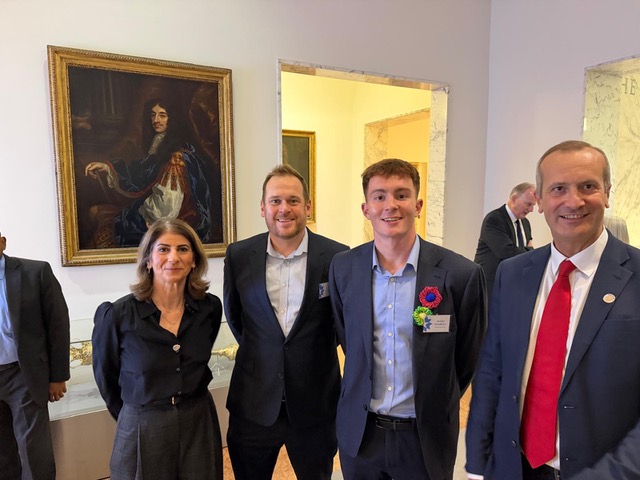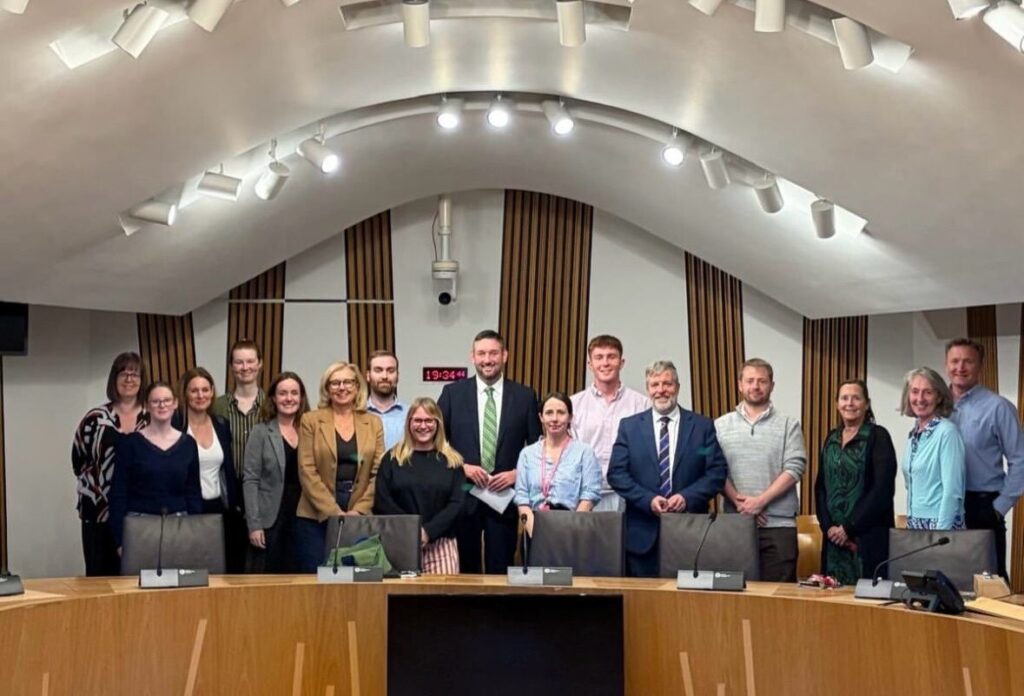

By Helen Bulbeck, Director of Services and Policy, brainstrust. EANO education day, Thursday 24 September.
These notes cover the EANO Educational Day only, not the main congress programme that followed.
Why the education day matters
The EANO Educational Day is the opening event of the European Association of Neuro-Oncology’s annual congress. It matters for three reasons:
- Multidisciplinary learning. Specialist tracks cover neurosurgery, neuroradiology, neuropathology, radiation oncology, medical oncology, nursing and allied health, so each discipline learns what the others are doing.
- Bridging practice gaps. The curriculum targets current gaps in the diagnosis, translational science and clinical management of central and peripheral nervous system tumours.
- Collaboration. It brings together professionals, trainees and international experts at every career stage, building the working relationships before the main scientific programme begins.
A game of two halves
This year’s education day felt like a game of two halves. The morning, led by the nurses and allied health professionals’ supportive care track, asked how people live with a brain tumour. After the break came the science of treating gliomas. I came away thinking the two halves need to be in the same room far more often than they are.
The morning started with a question that should be on the wall of every clinic: “What can we help this person do that matters to them?”
Jump to your specialty
- Rehabilitation and allied health professionals
- Nurses and clinical nurse specialists
- Neurosurgeons
- Neuro-oncologists
- Clinical oncologists and radiologists
- For everyone: the final whistle
Rehabilitation isn’t a Cinderella service any more
For physiotherapists, occupational therapists, speech and language therapists, dietitians and rehab medicine.
What this means for you
- Confidence to take on brain tumour referrals. Neuroplasticity happens in brain tumours too, and rehabilitation is not incompatible with a poor prognosis.
- A clearer case for your service. Around 40–50% of people with a brain tumour are referred for a rehab assessment, but only 20–30% receive rehab. That gap is about barriers in the system, not clinical eligibility.
- Outcomes that reflect what patients value. Staying independent, doing what matters, planning ahead and easing the load on carers all count as success.
- Better support for your team. Naming the emotional toll is the first step to protecting the people who look after our community.
What was presented
Michelangelo Bartolo (Habilita Institute, Bergamo) reminded us that rehabilitation, once the Cinderella of medicine, run on experience rather than evidence, has moved on. Function can persist within the tumour itself, and the surrounding brain and both hemispheres reorganise. Rehab should be intensive, repetitive, meaningful and challenging, built around goals set together by the team, the person and their carer.
He was honest about what makes it complex for our community: shorter hospital stays, complications from the tumour and its treatment, relapse (sometimes early), a reduced ability to make choices, and often a short life expectancy. Goals have to be revisited again and again, working closely with oncology teams on fatigue, headaches, sleep, low mood, seizures and blood clots. Neuro-oncology professionals need to know more about what rehab can offer. I’d add that patients and families do too.
Anna Zanotto (University of Kansas Medical Center) acknowledged that the evidence base is still patchy, though early studies suggest rehab is feasible and may improve function and quality of life. She shared findings from eight focus groups with 29 US rehab professionals working with people with high-grade glioma:
- Progress isn’t a straight line. Standard outcome measures miss much of what success looks like.
- Therapists often don’t know what patients have been told about their prognosis. One called it “a weird taboo”. That’s a communication gap we can close.
- The work takes an emotional toll. Less experienced staff were avoiding brain tumour referrals because they came into rehab “to make people better”.
Her priorities for practice
- Refer early, based on need.
- Coordinate across the team.
- Keep goals flexible and personal.
- Combine rebuilding lost function with working around it.
- Involve families.
Anna has presented her work to the brainstrust community before, so it was lovely to see her in person.
A model that works: Velindre
For clinical nurse specialists, ward and community nurses, and service leads.
What this means for you
- A proven route from pilot to permanent. Velindre’s clinic moved from a time-limited grant to core funding. That’s the holy grail, and it was driven by data and patient feedback.
- Coordinated care from the start. One clinic, early in the pathway, instead of separate referrals at crisis point.
- Quality of life protected. Quality-of-life scores held up or improved for most patients.
- Needs you won’t see in clinic. Assessing people at home uncovered problems with mobility, falls, communication and nutrition.
What was presented
The talk that left me most energised was from Catherine Lewis, clinical nurse specialist at Velindre Cancer Service. Since 2020, their multidisciplinary prehabilitation clinic has brought occupational therapy, physiotherapy, speech and language therapy, dietetics and the CNS together in one clinic, early in the pathway. Patients valued the coordinated, timely, person-centred care.
A 12-month review found that over 80% of patients had at least one unplanned hospital admission. The team responded with a home-based specialist outreach pilot, which showed how much more you learn by assessing someone in their own home.
Surgery: going further, more safely
For neurosurgeons and the theatre team.
After the break, the focus moved from the person to the tumour, yet so much of the science ended up in the same place: the conversation with the patient.
What this means for you
- More survival benefit, targeted to the right patients. Supramaximal resection matters for survival, but not for everyone equally; the work now is identifying who gains most.
- Faster answers in theatre. Intraoperative Raman spectroscopy can tell within minutes whether tissue is likely to be tumour.
- Safer decisions at the margin. Risk maps show which areas of the brain are most dangerous to operate on.
What was presented
Philipp Karschnia (TUM Munich) spoke on supramaximal resection in glioblastoma: removing tissue beyond the part of the tumour that lights up on a scan. The risk maps he described are built from many surgeons’ experience. For patients, it’s the balance we always come back to: length of life against quality of life.
Vorasidenib and targeted therapies: the right drug, the right conversation
For medical and clinical neuro-oncologists, and the nurses who support treatment decisions.
What this means for you
- Less scan anxiety for your patients. Setting the expectation of stability, not shrinkage, upfront saves people a lot of worry.
- Clearer footing in the grey areas. Knowing where the evidence stops makes for more honest shared decisions.
- More patients matched to the right drug. Profiling tumours early, not at relapse, opens more routes to targeted treatment.
Vorasidenib: three years on
It’s been three years since the INDIGO trial changed practice for people with IDH-mutant low-grade glioma. Marjolein Geurts (Erasmus MC Cancer Institute, Rotterdam) shared the updates. Median progression-free survival is now around 44 months, compared with around 11 months on placebo.
The most useful part was about conversations. Patients often ask, “Will my tumour shrink?” The honest answer is that the aim is stability. Shrinkage is uncommon and usually takes more than a year.
She was refreshingly open about the grey areas:
- After a complete resection, should someone start vorasidenib? INDIGO didn’t include these patients, so we don’t know.
- Is “grade 2 with focal grade 3” a line in the sand, or part of a biological continuum?
- After many prior treatments, the tumour may no longer depend on the IDH mutation, so the drug is unlikely to help.
Each decision came down to an honest conversation about what mattered to the patient. One young woman chose not to start treatment so that she could start a family, and her baby was born just weeks ago. That’s shared decision-making in practice, and exactly what the morning was about.
Targeted therapies: the right drug for the right tumour
Mehdi Touat (Pitié-Salpêtrière, Paris) described how targeted therapies are gradually changing care for some gliomas. BRAF is the success story, with growing evidence for targeting both mutations and fusions. H3K27, NTRK and FGFR are promising but at earlier stages.
His advice:
- Profile tumours early rather than at relapse.
- Check that the tumour really depends on the target.
- Use every route to access: clinical trials, molecular tumour boards and early access programmes.
For patients, access is often the hardest part.
Pseudoprogression: when a scan isn’t what it seems
For clinical oncologists, neuroradiologists, and anyone who talks patients through scan results.
What this means for you
- Fewer effective treatments stopped too early. A new or growing area on an early scan shouldn’t automatically be read as progression.
- A clear, practical approach. RANO 2.0 gives you a route for the clinically stable patient.
- More confident reads. Combining clinical, molecular and imaging information over time beats any single test.
- Shared language with patients. A new umbrella term, TRIA, is coming to scan reports. Patients and families will need to understand why.
What was presented
Two talks tackled one of the most frightening moments for patients and families: a scan that looks as if the tumour is growing, when it’s actually showing treatment effects that settle over time. It’s most common in the first three to six months after radiotherapy, especially after chemoradiation for glioblastoma. Getting it wrong means stopping effective treatment too early, or switching to treatments that aren’t needed.
Dieta Brandsma (Netherlands Cancer Institute) focused on practice:
- If someone is clinically stable, RANO 2.0 guidance is to carry on with treatment and rescan soon.
- Keep steroids to the lowest dose for the shortest time.
- Consider biopsy only when the answer would genuinely change what happens next. Even then, tumour and treatment effect often sit side by side.
- The BRAINS trial in the Netherlands is testing whether bevacizumab has a role.
Her message: don’t stop treatment too soon, but don’t miss true progression either.
Laurien De Roeck (UZ Leuven) looked at imaging. Standard MRI is still the cornerstone, but on its own it often can’t tell treatment effect from tumour. Diffusion, perfusion, spectroscopy and amino-acid PET all add something, but no single test is the answer. What works is putting clinical, molecular and imaging information together, over time.
The change patients will notice is in language. The new EORTC–ESNR–ESTRO consensus introduces Treatment-Related Imaging Abnormality (TRIA) as an umbrella term for scan changes after radiotherapy, with pseudoprogression as one part of that spectrum. De Roeck said the framework applies across brain tumours, including brain metastases. As the only UK charity working with the brain metastases community, we’ll be watching closely. When the words in someone’s scan report change, the people reading them need to understand why.
For everyone in the multidisciplinary team.
The final whistle
So what connects the two halves?
- Timing. The first half said people need the right support at the right time, from diagnosis onwards, and not only at crisis point.
- Uncertainty. The second kept returning to grey areas without evidence, scans that don’t mean what they seem, and decisions that come down to conversation.
- Access. Only a fraction of people referred for rehab ever receive it, and promising targeted drugs often reach patients only through trials or early access schemes.
And both come back to the same thing: communication. Surgeons, oncologists, radiologists, nurses, therapists, patients and families all need to be telling the same story.
None of us is as smart as all of us.
Helen Bulbeck, Director of Services and Policy, brainstrust