End of life

End of life looks different for everyone, and so does what matters. Here you will find honest, compassionate information to help you and those closest to you plan ahead and understand the care options available, making sure that everyone’s voice and wishes remain at the heart of everything, just as they have been throughout this journey. Our aim is that you all feel as informed, heard, and supported as possible

On top of things, not overwhelmed.
Regain control.

Just been diagnosed with a brain tumour? Want to find out more about brain tumours? Maybe you would like to offer support, or find out the latest brain cancer news. Whatever the reason, we’d love to hear from you.

Call or email us to get in touch today

Patient guide - End of life care

The brain tumour patient guide is freely available to brain tumour patients and doctors and nurses working in relevant specialties.

Patient guide - end-of-life care

Hypnotherapy

When you are living with a brain tumour, or are caring for someone living with a brain tumour, you may find hypnotherapy useful in improving wellbeing.

Know Hows

When living with a brain tumour diagnosis, lots of things can suddenly feel like they are out of our control and it can be difficult to know where to turn and what to focus on. These Know Hows cover a range of topics designed to help you take control of what is happening at the moment and develop strategies to help you to find a way forward.

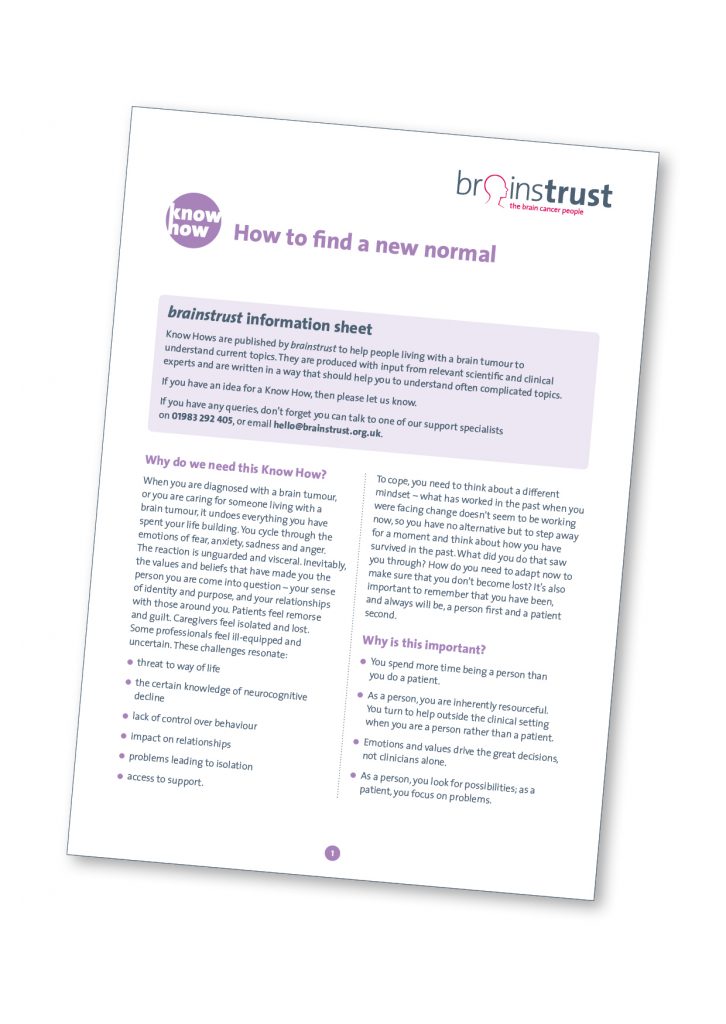
How to find a new normal

If you can find a new normal following a brain tumour diagnosis, it means that you can own the situation, take control and live with the life you want.

This Know How will explore what this means and some strategies to help you find a way forward.

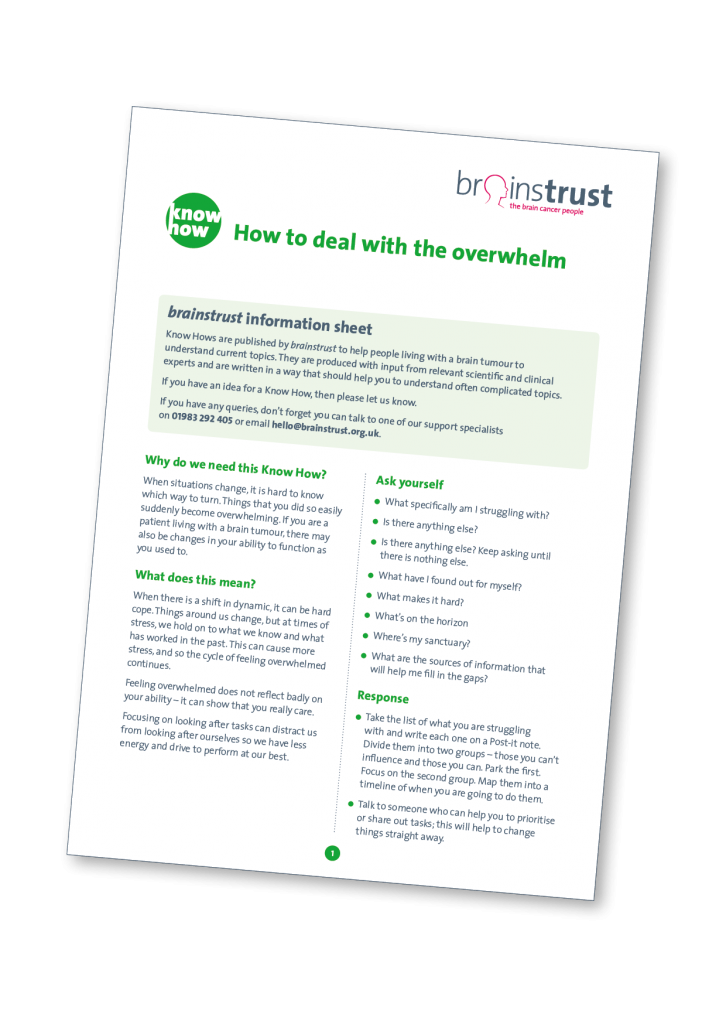
Dealing with the overwhelm

When situations change, it is hard to know which way to turn. Things that you did so easily suddenly become overwhelming. If you are a person living with a brain tumour, there may also be changes in your ability to function as you used to. Some things are within your power to change. Some are not. This Know How is designed to help you understand the difference, and prioritise the things that you can have an impact on.

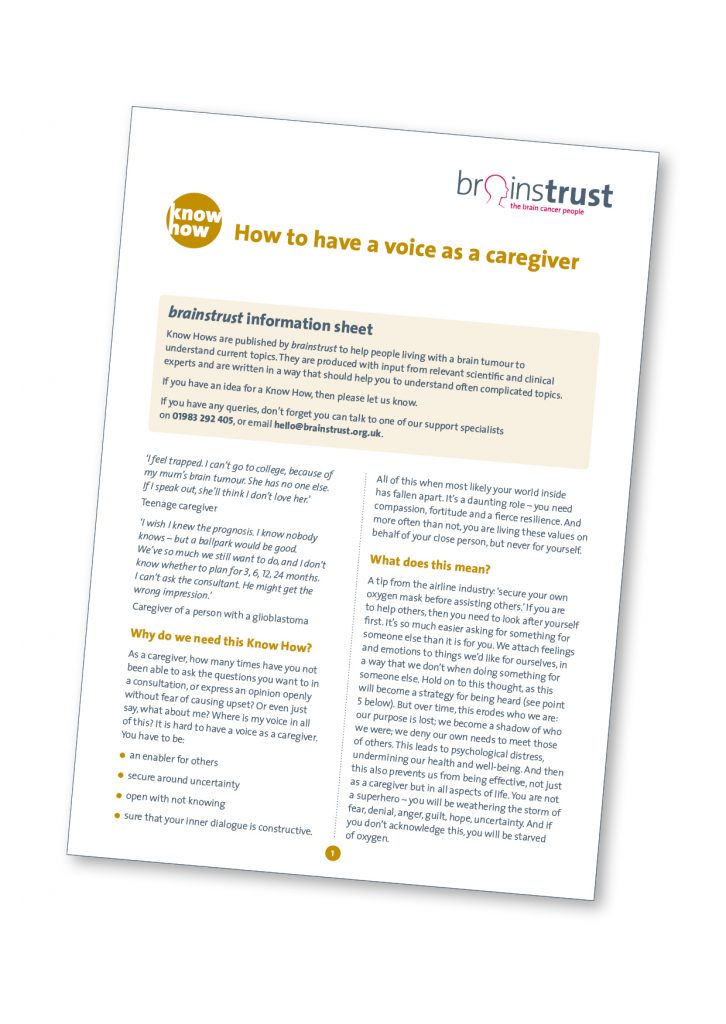
How to have a voice as a caregiver

Being a caregiver is a daunting role – you need compassion, fortitude and fierce resilience. And more often than not, you are living these values on behalf of your close person, but never for yourself.

This Know How will help you find your voice as a caregiver of someone with a brain tumour.

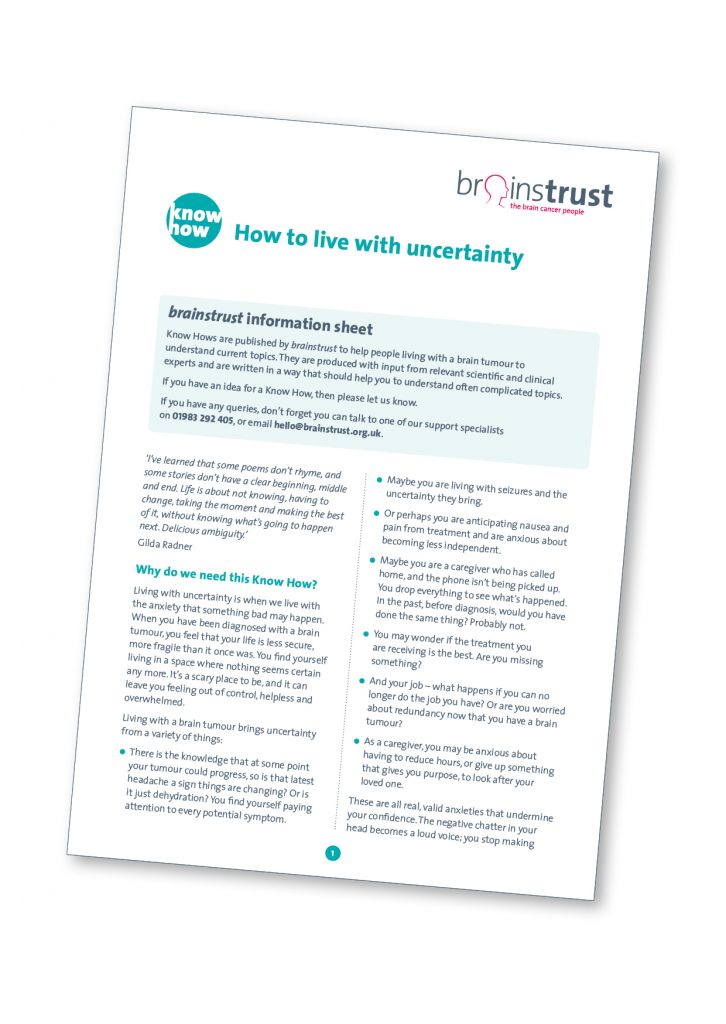
How to live with uncertainty

When you have been diagnosed with a brain tumour, you feel that your life is less secure, more fragile than it once was. You find yourself living in a space where nothing seems certain anymore. It’s a scary place to be, and it can leave you feeling out of control and overwhelmed.

This Know How will help you get comfortable with living with uncertainty.

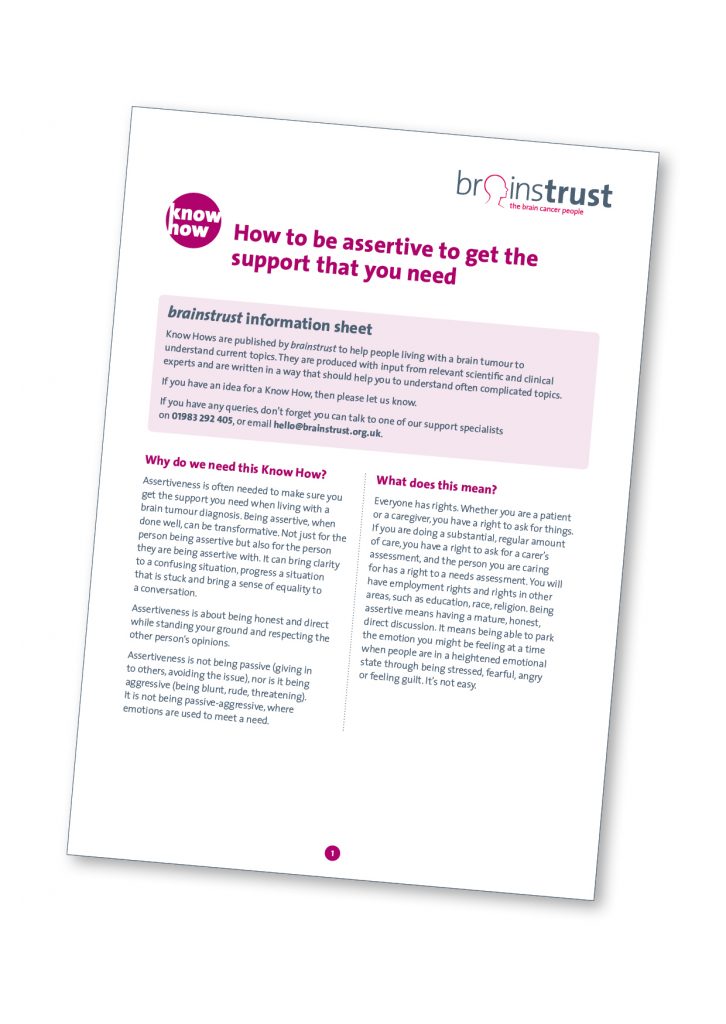
How to be assertive

Assertiveness is often needed to make sure you get the support you need when living with a brain tumour diagnosis. Being assertive, when done well, can be transformative. It can bring clarity to a confusing situation, progress a situation that is stuck and bring a sense of equality to a conversation.

This Know How will help you use assertiveness to get the support that you need.

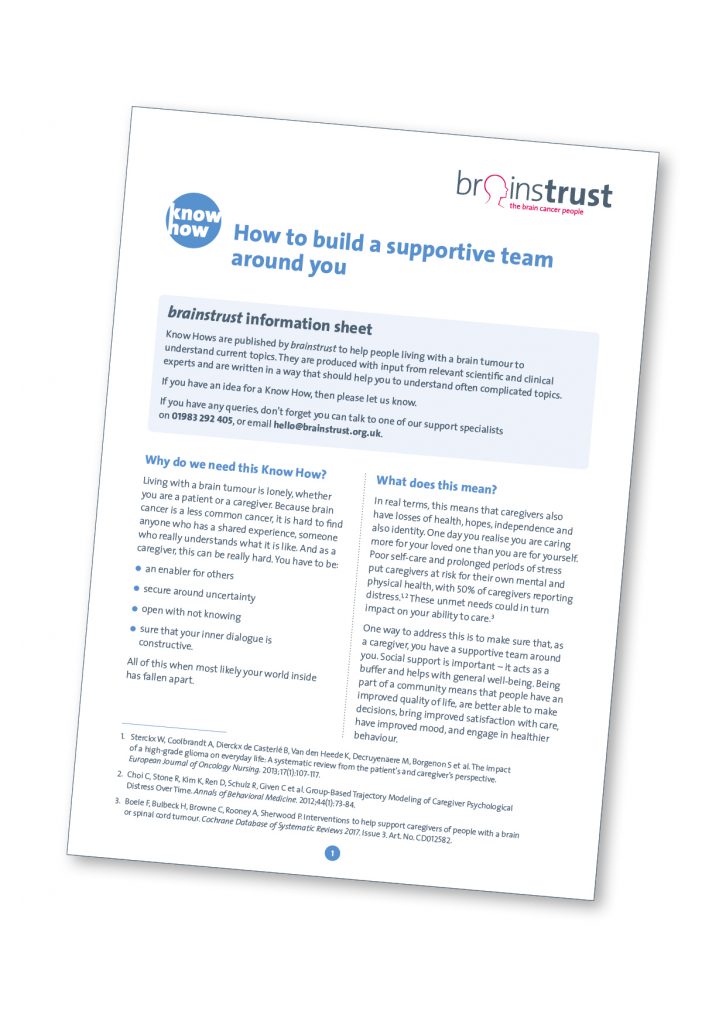
How to build a supportive team around you

Because brain cancer is a less common cancer, it is hard to find anyone who has a shared experience, someone who really understands what it is like. And as a caregiver, this can be really hard. One way to address this is to make sure that, as a caregiver, you have a supportive team around you. Social support is important – it acts as a buffer and helps with general well-being.

This Know How will help you build a supportive team so you can cope better when a loved one has a brain tumour.
Subscribe to our mailing list to hear about all the latest news, events, research and resources

Fields marked with an * are required