Living well
A brain tumour diagnosis does not define what your life can look like. This section explores the practical, emotional, and physical tools that can help you live as well as possible, from coaching and mindfulness to managing fatigue, relationships, and everyday life.
Your brain tumour and work
Whether you have a brain tumour and your ability to work has been affected by your diagnosis, or you need time off to look after a loved one, changes to your work-life can be complicated and have a big impact on your mental health. You may be wondering ‘can you work with a brain tumour?’ ‘what do I do if I can’t work?’ ‘how do I go about returning to work?’. There is lots of information and support that you can access to feel more informed and in control.
Taking control
If you’ve been diagnosed with a brain tumour, or someone close to you has, you’ve entered a new world. Suddenly you’re a ‘patient’ or a ‘caregiver’ – neither are roles which you’ve chosen, or for which you are trained. You’ve been flung into uncertainty so that making good decisions about what next becomes instantly more difficult. The world has become a different, unfamiliar and scary place and you can feel totally out of control.
Included, not isolated. Become part of a community.
You don’t have to face this journey alone. We’ve got a huge network of inspiring people who understand life with a brain tumour, waiting to meet you.
Join us at a virtual meet up or a face to face event, or our private Facebook community.
Know Hows
When living with a brain tumour diagnosis, lots of things can suddenly feel like they are out of our control and it can be difficult to know where to turn and what to focus on. These Know Hows cover a range of topics designed to help you take control of what is happening at the moment and develop strategies to help you to find a way forward.
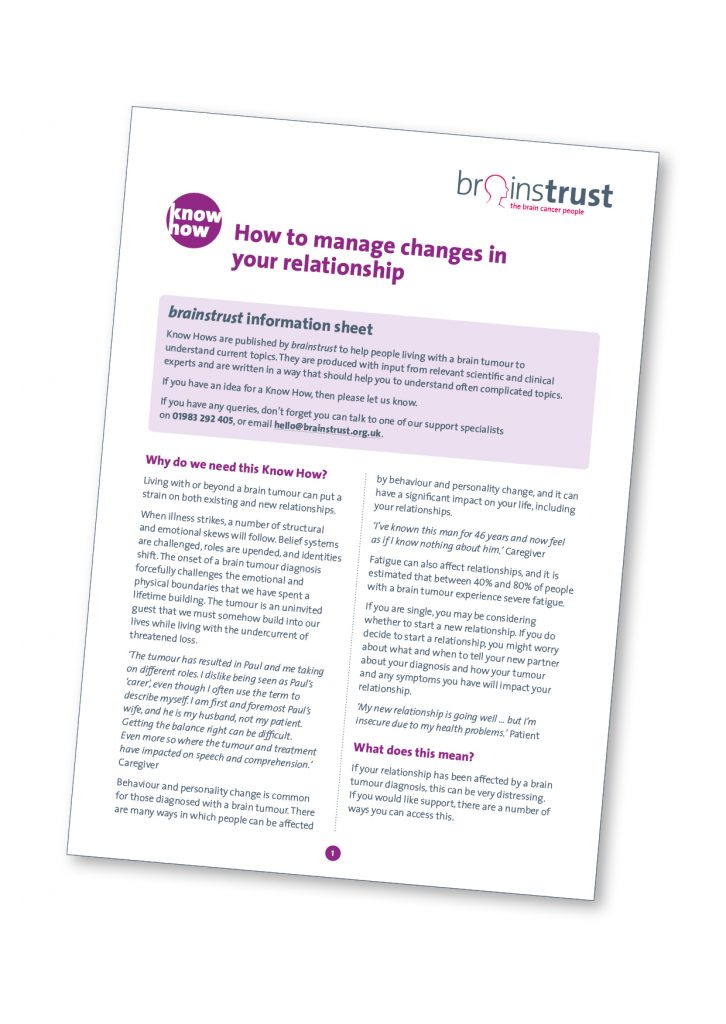
How to manage changes in your relationship
Living with or beyond a brain tumour can put a strain on both existing and new relationships.
In this Know How, we will explore some resources and information that can help you to manage changes in relationships when you or someone closed to you is diagnosed with a brain tumour.
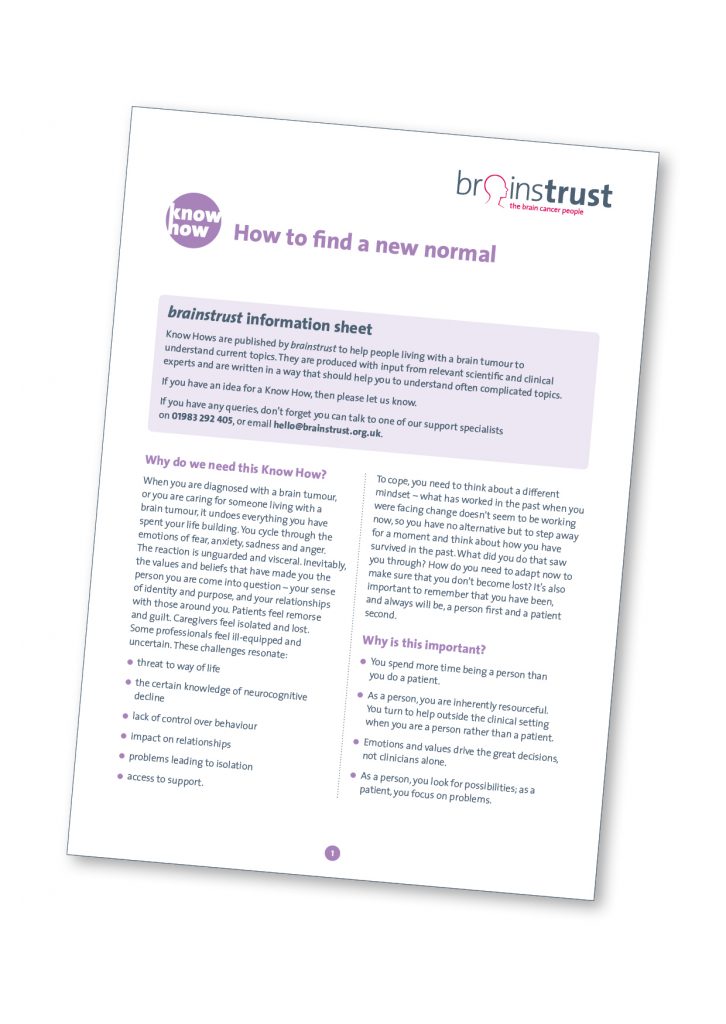
How to find a new normal
If you can find a new normal following a brain tumour diagnosis, it means that you can own the situation, take control and live with the life you want.
This Know How will explore what this means and some strategies to help you find a way forward.
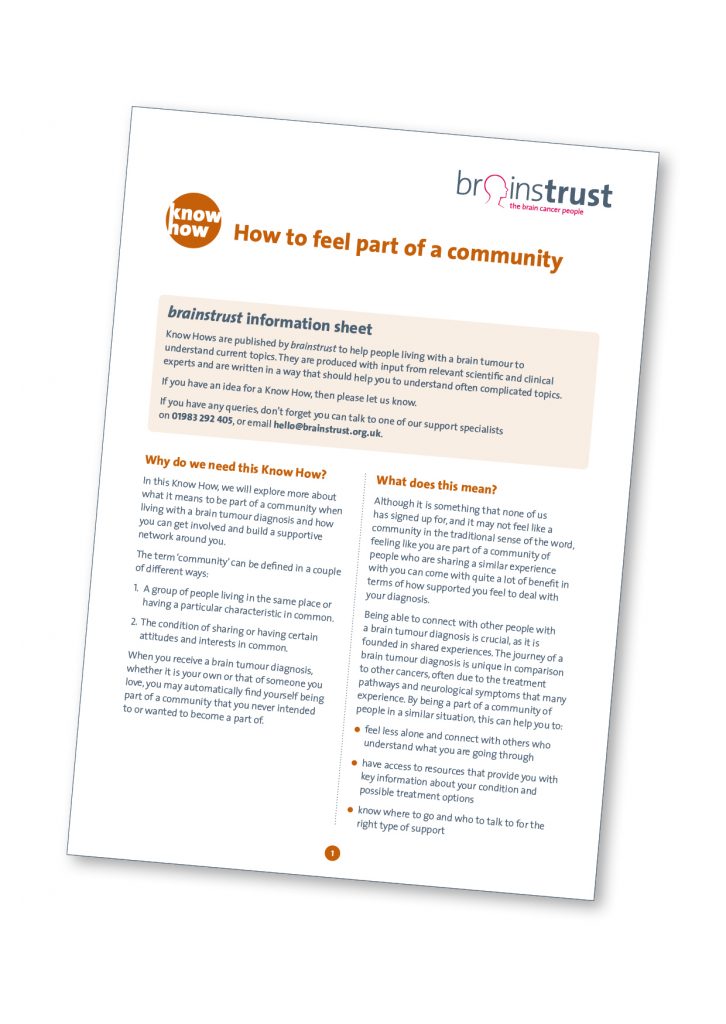
How to feel part of a community
When living with a brain tumour diagnosis, you may automatically find yourself being part of a community that you never intended to or wanted to become a part of.
This Know How will explore more about what it means to be part of a community when living with a brain tumour diagnosis and how you can get involved and build a supportive network around you.
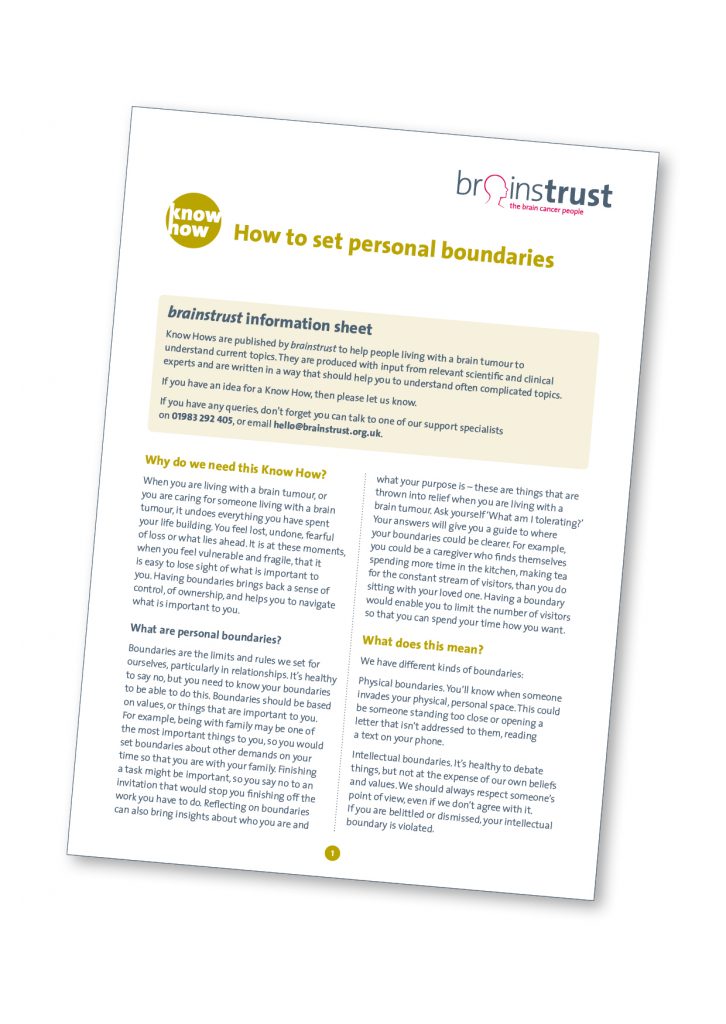
How to set personal boundaries
When you are living with a brain tumour, or you are caring for someone living with a brain tumour it can leave you feeling lost and fearful of what lies ahead. Having boundaries can bring back a sense of control and help you to navigate what it is important to you.
This Know How will explore what we mean by personal boundaries and how you can set them.
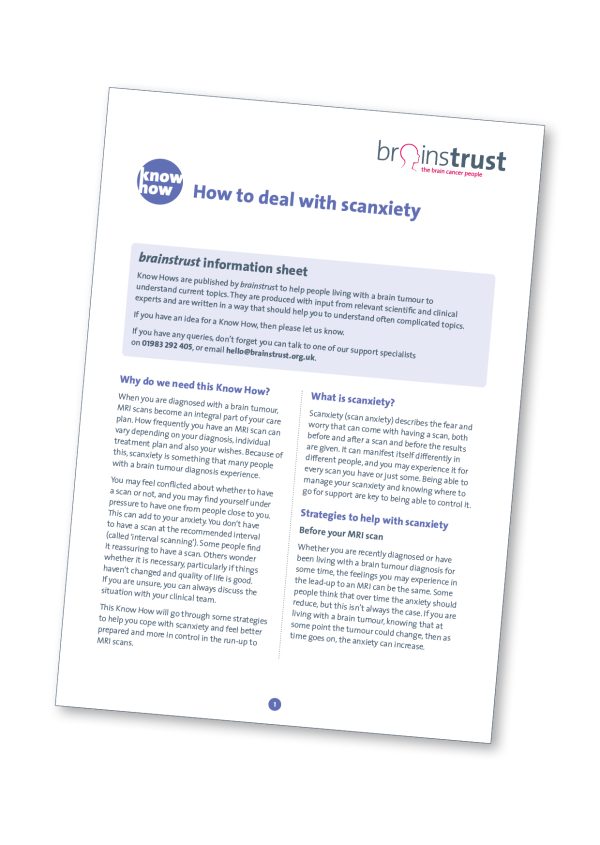
How to deal with scanxiety
When you are diagnosed with a brain tumour, MRI scans become an integral part of your care plan. Because of this, scanxiety – fear and nerves around both the scan and the results – is something that many people with a brain tumour diagnosis experience.
This Know How will go through some strategies to help you cope with scanxiety and feel better prepared and more in control in the run-up to MRI scans.
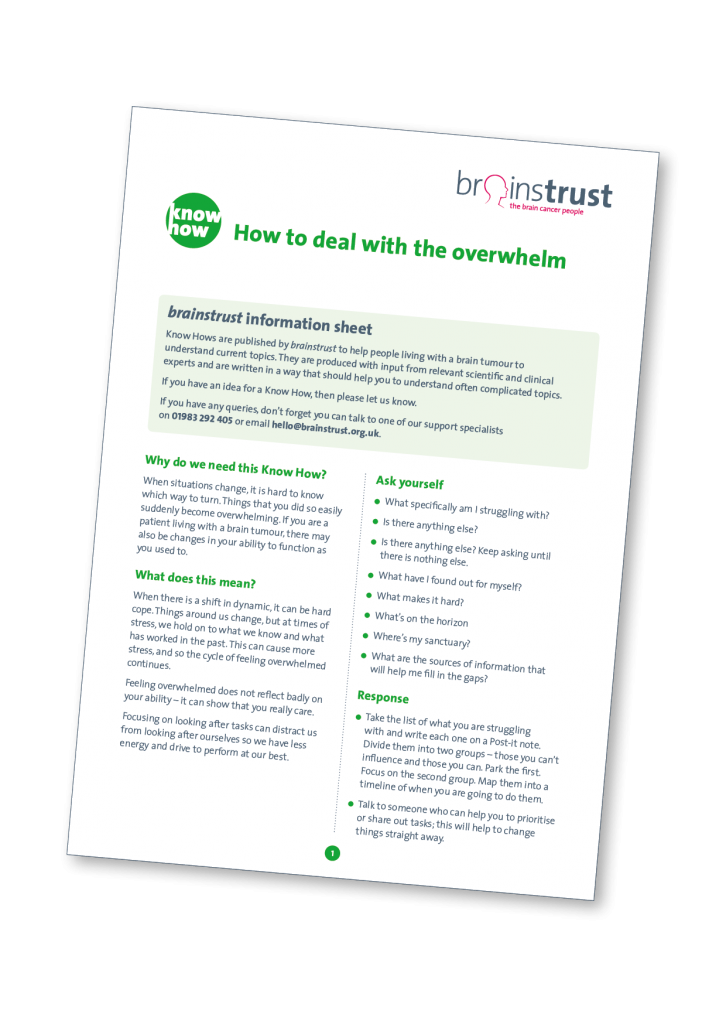
Dealing with the overwhelm
When situations change, it is hard to know which way to turn. Things that you did so easily suddenly become overwhelming. If you are a person living with a brain tumour, there may also be changes in your ability to function as you used to. Some things are within your power to change. Some are not. This Know How is designed to help you understand the difference, and prioritise the things that you can have an impact on.
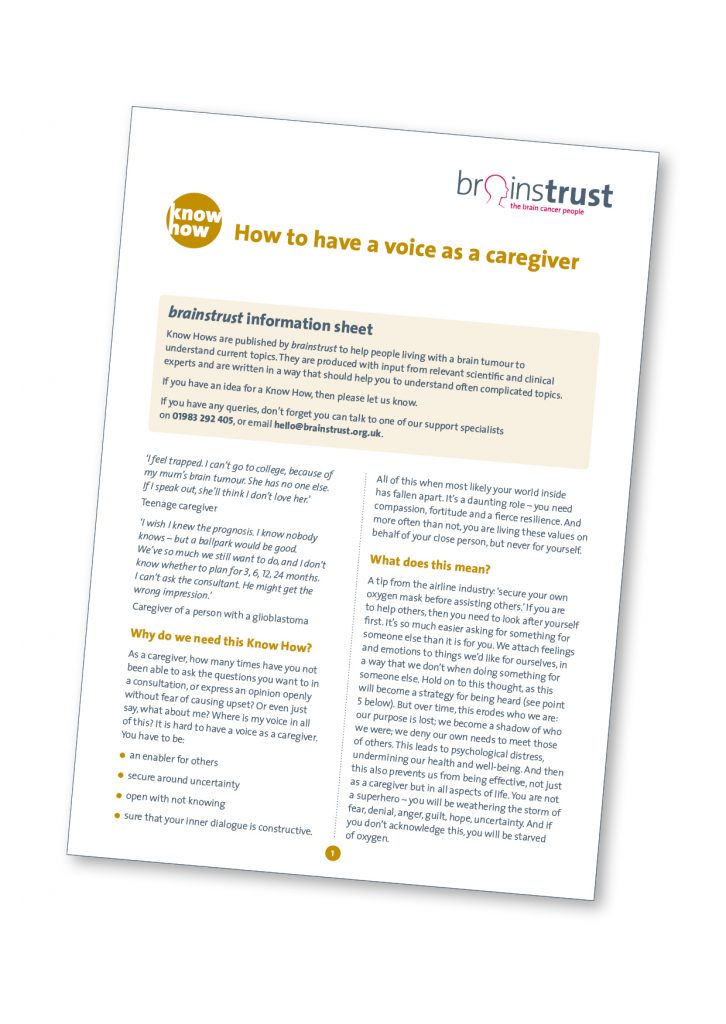
How to have a voice as a caregiver
Being a caregiver is a daunting role – you need compassion, fortitude and fierce resilience. And more often than not, you are living these values on behalf of your close person, but never for yourself.
This Know How will help you find your voice as a caregiver of someone with a brain tumour.
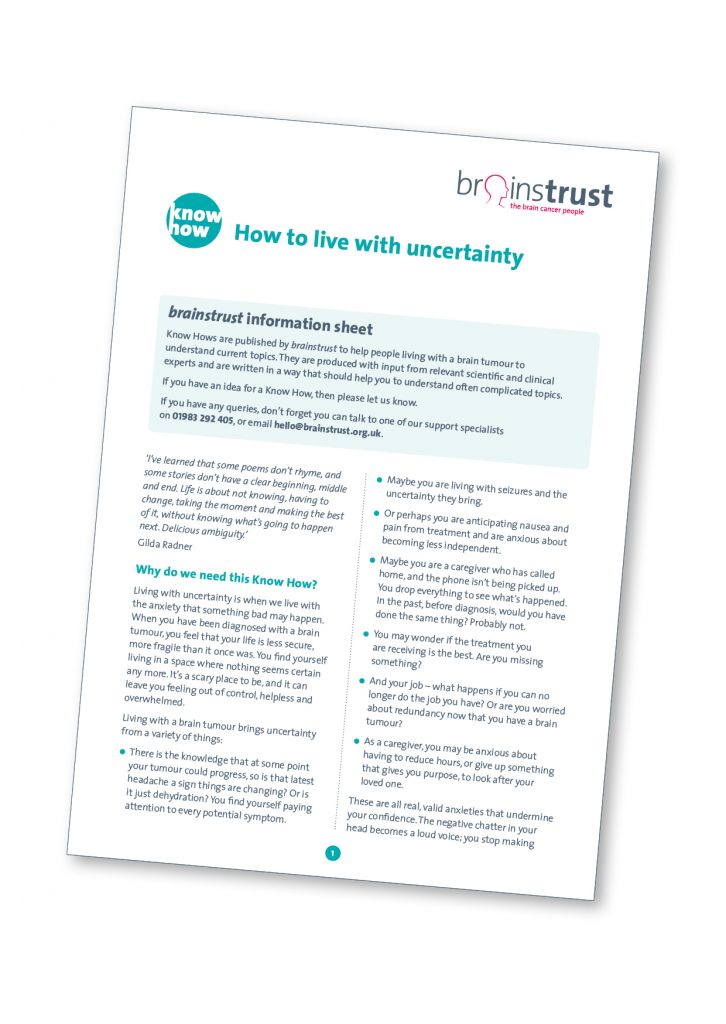
How to live with uncertainty
When you have been diagnosed with a brain tumour, you feel that your life is less secure, more fragile than it once was. You find yourself living in a space where nothing seems certain anymore. It’s a scary place to be, and it can leave you feeling out of control and overwhelmed.
This Know How will help you get comfortable with living with uncertainty.
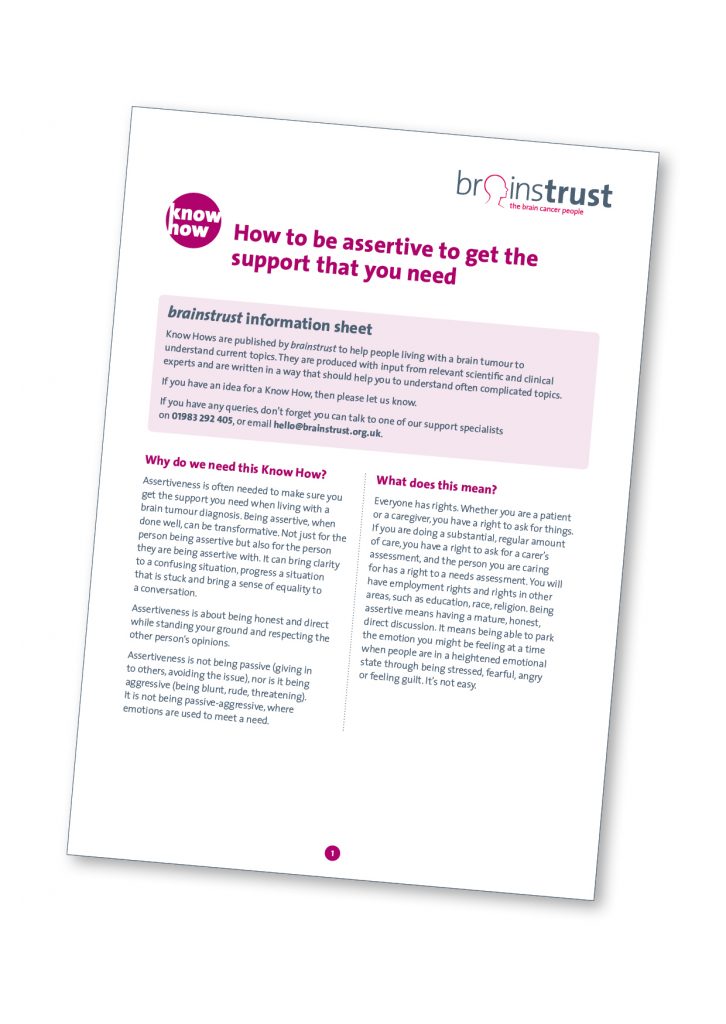
How to be assertive
Assertiveness is often needed to make sure you get the support you need when living with a brain tumour diagnosis. Being assertive, when done well, can be transformative. It can bring clarity to a confusing situation, progress a situation that is stuck and bring a sense of equality to a conversation.
This Know How will help you use assertiveness to get the support that you need.
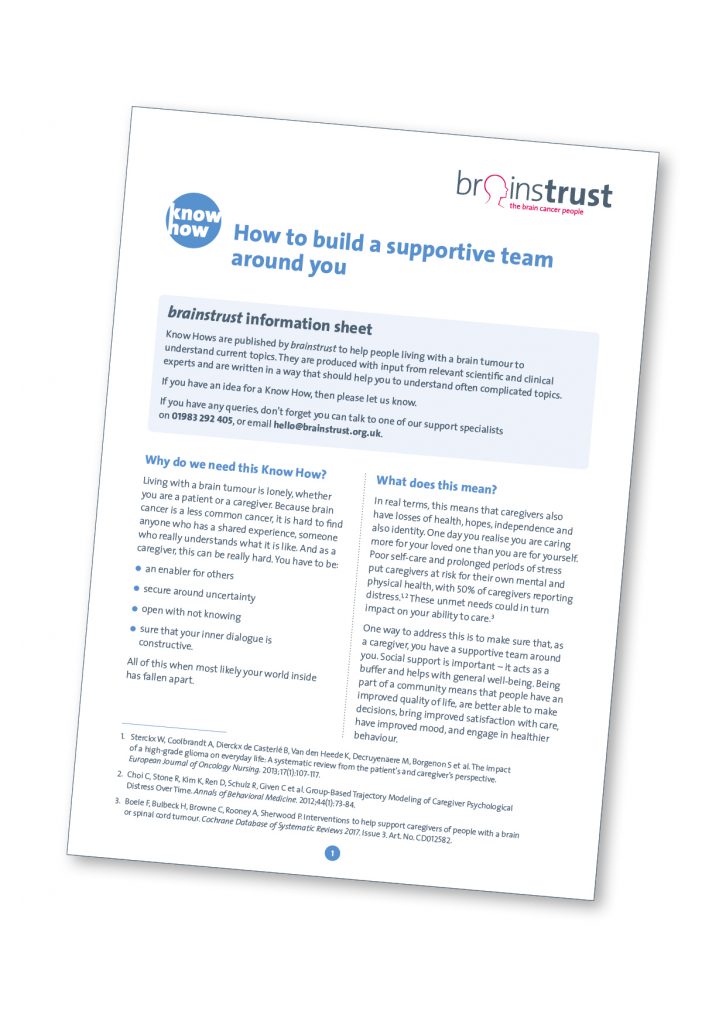
How to build a supportive team around you
Because brain cancer is a less common cancer, it is hard to find anyone who has a shared experience, someone who really understands what it is like. And as a caregiver, this can be really hard. One way to address this is to make sure that, as a caregiver, you have a supportive team around you. Social support is important – it acts as a buffer and helps with general well-being.
This Know How will help you build a supportive team so you can cope better when a loved one has a brain tumour.

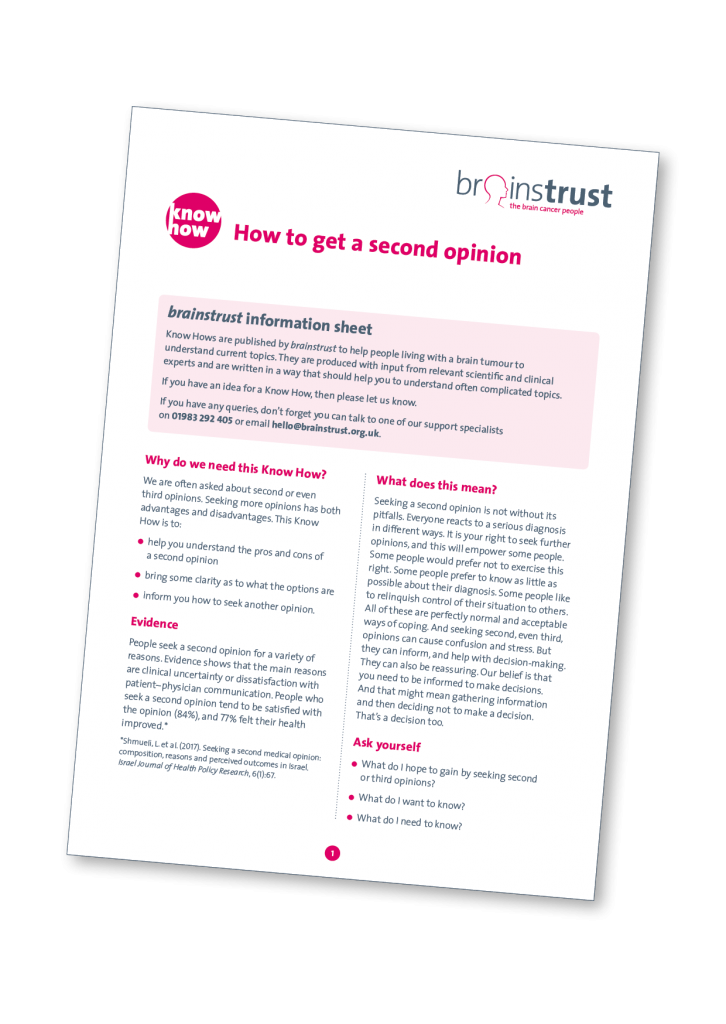
How to get a second opinion
We are often asked about second or even third opinions. Seeking more opinions has both advantages and disadvantages. This Know How has been designed to help you understand the pros and cons of a second opinion, bring some clarity as to what the options are and inform you how to go about seeking another opinion.
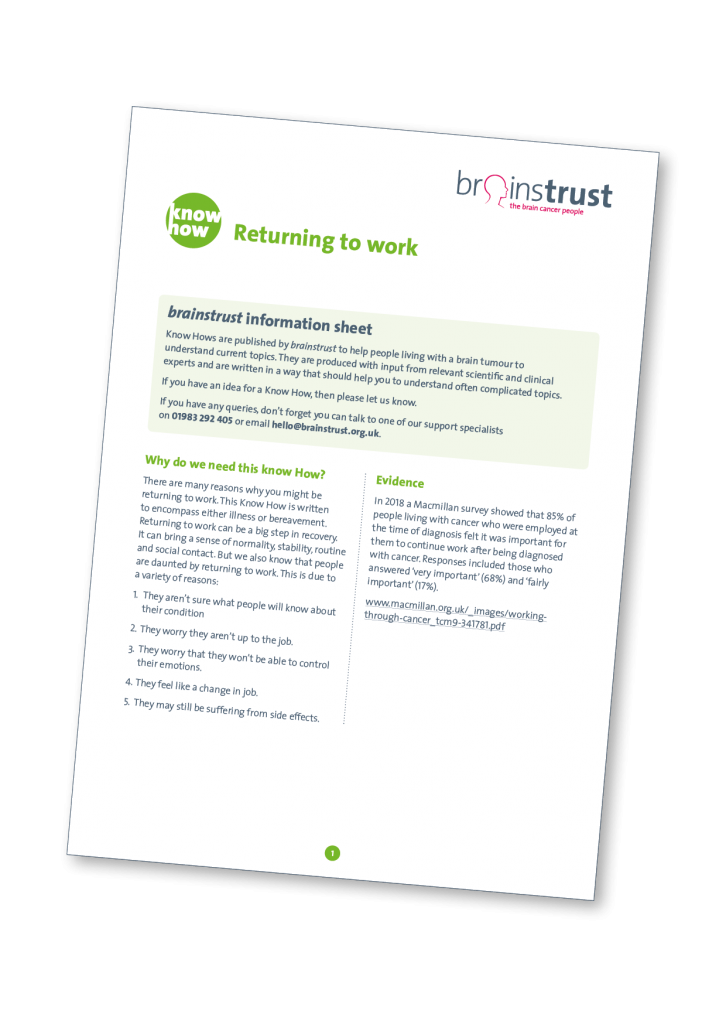
Returning to work
Returning to work can be a big step in recovery. It can bring a sense of normality, stability, routine and social contact. But we also know that it can be very daunting. This Know How will help you to prepare for returning to work, understand what help is available to you.
It has been written to encompass returning to work after bereavement as well as illness.
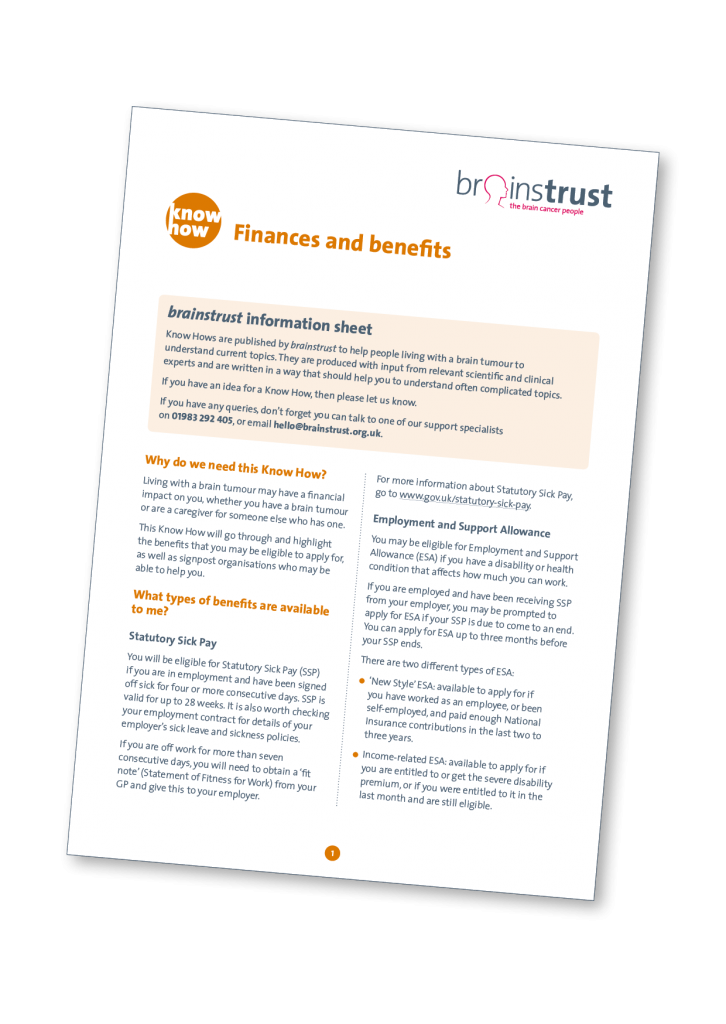
Finances and benefits
No longer being able to work, new and expensive mobility requirements, having to travel long distances to get to hospital – whatever the reasons for you, having a brain tumour can be a huge financial strain.
The latest Brain tumour Know How covers finances and benefits that could support you and your family when one of you has a brain tumour.

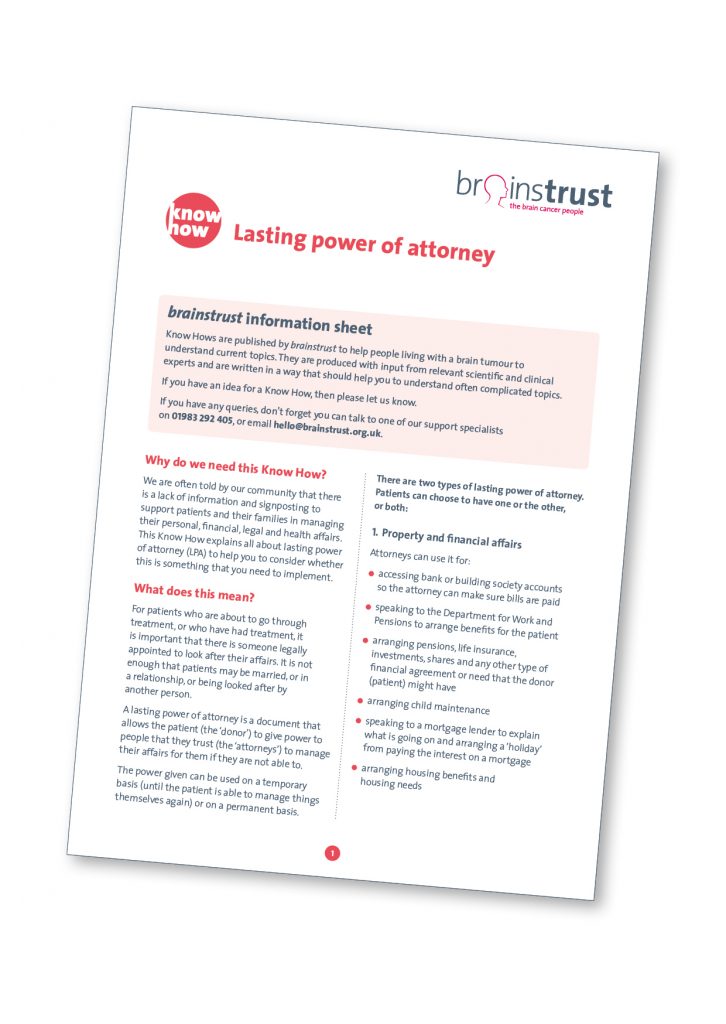
Lasting power of attorney
We are often told by our community that there is a lack of information and signposting to support patients and their families in managing their personal, financial, legal and health affairs.
This Know How explains all about lasting power of attorney (LPA) to help you to consider whether this is something that you need to implement.
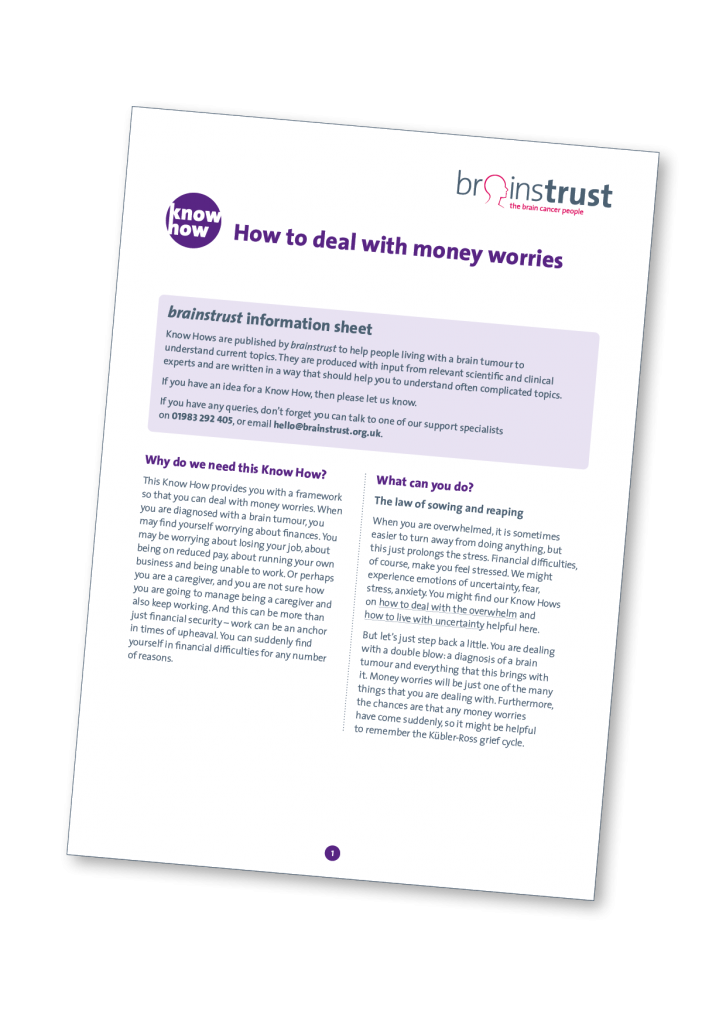
Money worries
When you are diagnosed with a brain tumour, you may find yourself worrying about finances. You may be worrying about losing your job, about being on reduced pay, about running your own business and being unable to work. Or perhaps you are a caregiver, and you are not sure how you are going to manage being a caregiver and also keep working. You can suddenly find yourself in financial difficulties for any number of reasons.
This Know How provides you with a framework so that you can deal with money worries.
How to get a caregivers assessment
Under the Care Act 2014 everybody who is caring for someone over the age of 18 with a medical condition or disability is entitled to these assessments. We have produced a Know How which will explain more about carer’s assessments, what they and how you can get one.
Latest events
Hypnotherapy
When you are living with a brain tumour, or are caring for someone living with a brain tumour, you may find hypnotherapy useful in improving wellbeing.
The brain box
The brainstrust brain box is the must have toolkit for people living with a brain tumour diagnosis. It contains a number of essential things to support you and help you feel better resourced and more in control.
Patient guide – survivorship
If you are living with or beyond your brain tumour, you are a survivor. This can mean having an inoperable brain tumour or living a braintumour-free life but having experienced surgery and adjuvant therapies.