Post-treatment

Post-treatment:

Finishing treatment is a significant milestone, but it can also bring its own uncertainties. From managing ongoing side effects to adjusting to a new normal, this section offers support and information to help you thrive in life after active treatment.

Taking control

If you’ve been diagnosed with a brain tumour, or someone close to you has, you’ve entered a new world. Suddenly you’re a ‘patient’ or a ‘caregiver’ – neither are roles which you’ve chosen, or for which you are trained. You’ve been flung into uncertainty so that making good decisions about what next becomes instantly more difficult. The world has become a different, unfamiliar and scary place and you can feel totally out of control.

Your brain tumour and work

Whether you have a brain tumour and your ability to work has been affected by your diagnosis, or you need time off to look after a loved one, changes to your work-life can be complicated and have a big impact on your mental health. You may be wondering ‘can you work with a brain tumour?’ ‘what do I do if I can’t work?’ ‘how do I go about returning to work?’. There is lots of information and support that you can access to feel more informed and in control.

Included, not isolated.
Become part of a community.

You don’t have to face this journey alone. We’ve got a huge network of inspiring people who understand life with a brain tumour, waiting to meet you.

Join us at a virtual meet up or a face to face event, or our private Facebook community.

Know Hows

When living with a brain tumour diagnosis, lots of things can suddenly feel like they are out of our control and it can be difficult to know where to turn and what to focus on. These Know Hows cover a range of topics designed to help you take control of what is happening at the moment and develop strategies to help you to find a way forward.

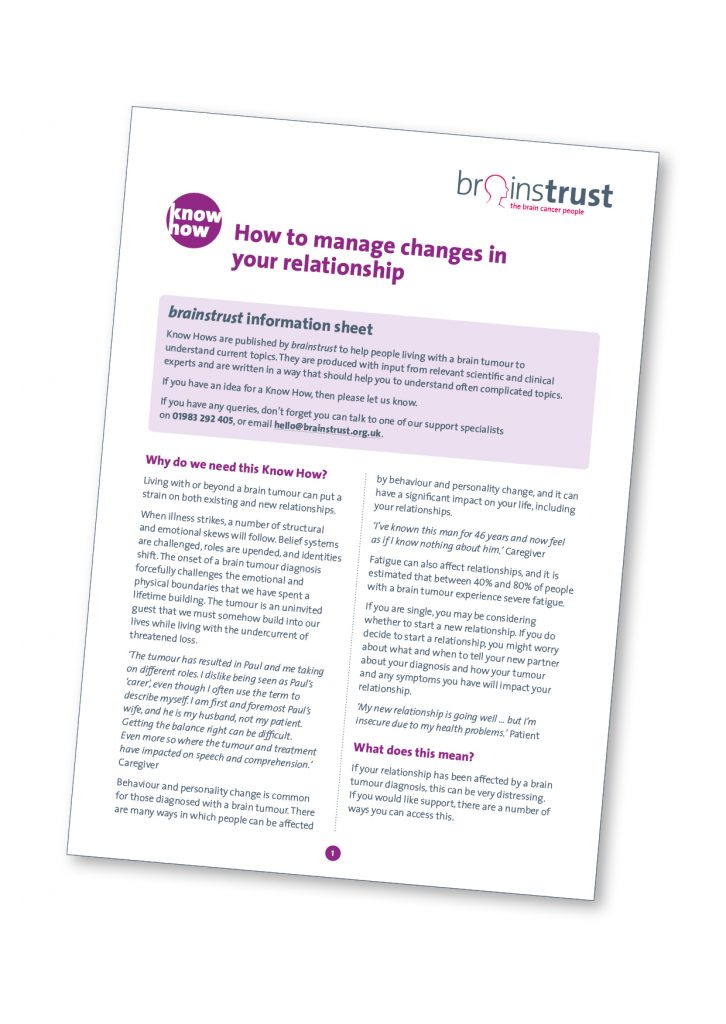
How to manage changes in your relationship

Living with or beyond a brain tumour can put a strain on both existing and new relationships.

In this Know How, we will explore some resources and information that can help you to manage changes in relationships when you or someone closed to you is diagnosed with a brain tumour.

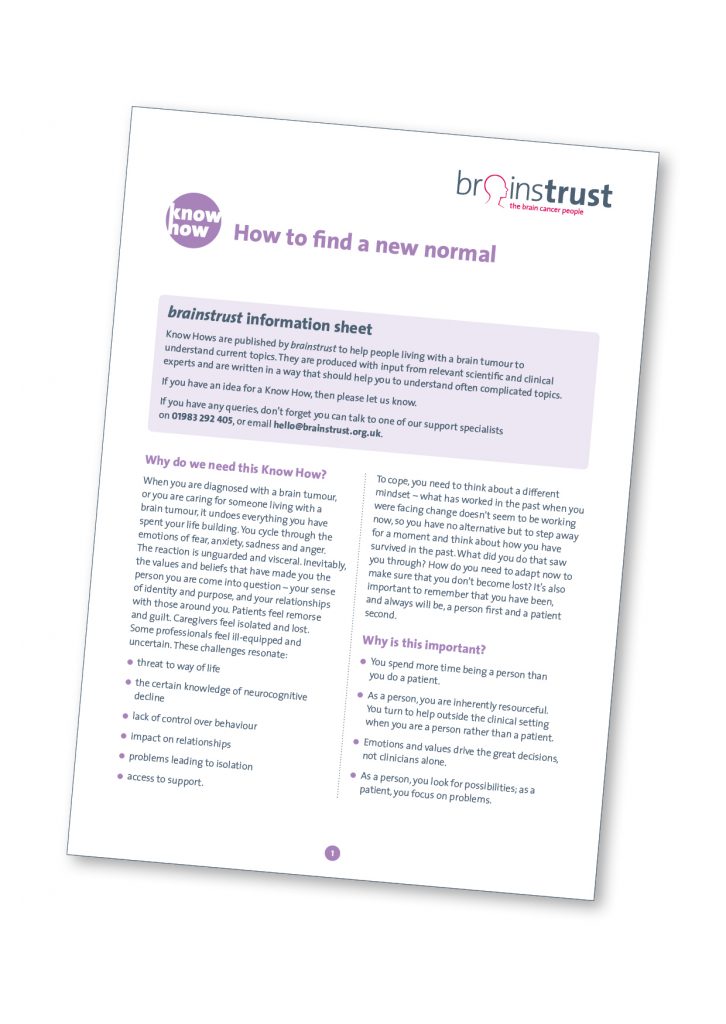
How to find a new normal

If you can find a new normal following a brain tumour diagnosis, it means that you can own the situation, take control and live with the life you want.

This Know How will explore what this means and some strategies to help you find a way forward.

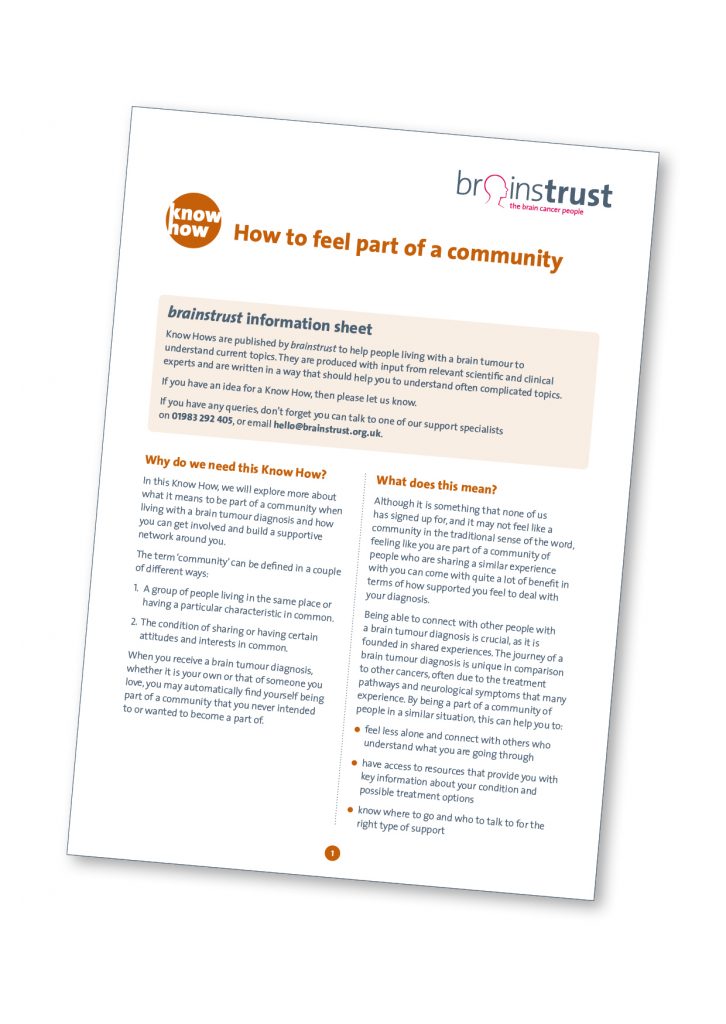
How to feel part of a community

When living with a brain tumour diagnosis, you may automatically find yourself being part of a community that you never intended to or wanted to become a part of.

This Know How will explore more about what it means to be part of a community when living with a brain tumour diagnosis and how you can get involved and build a supportive network around you.

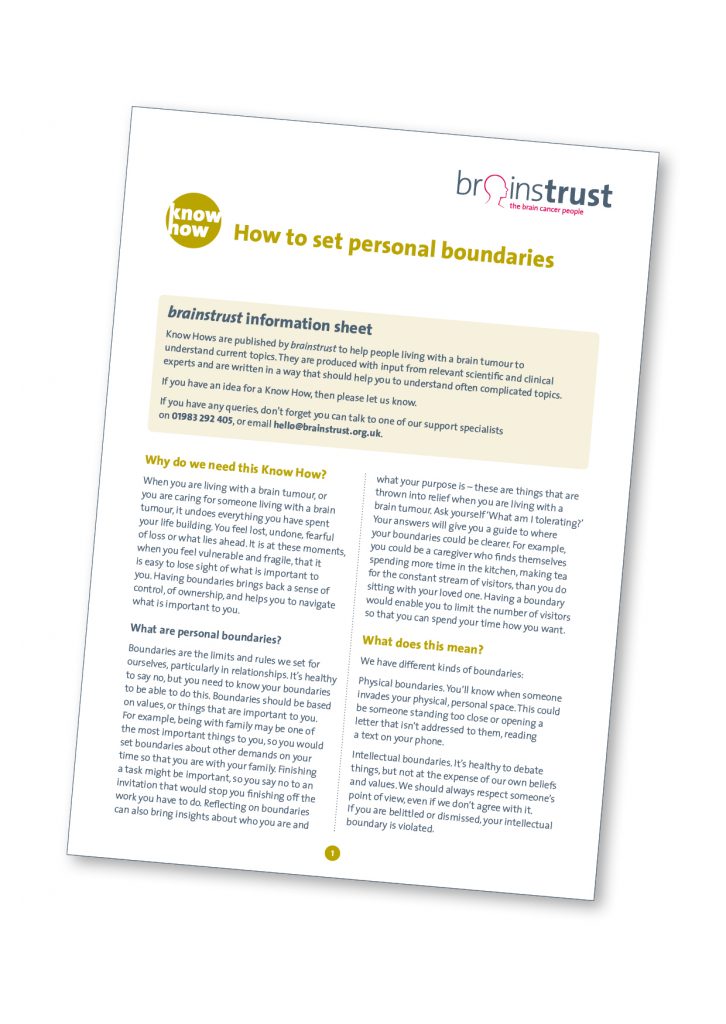
How to set personal boundaries

When you are living with a brain tumour, or you are caring for someone living with a brain tumour it can leave you feeling lost and fearful of what lies ahead. Having boundaries can bring back a sense of control and help you to navigate what it is important to you.

This Know How will explore what we mean by personal boundaries and how you can set them.

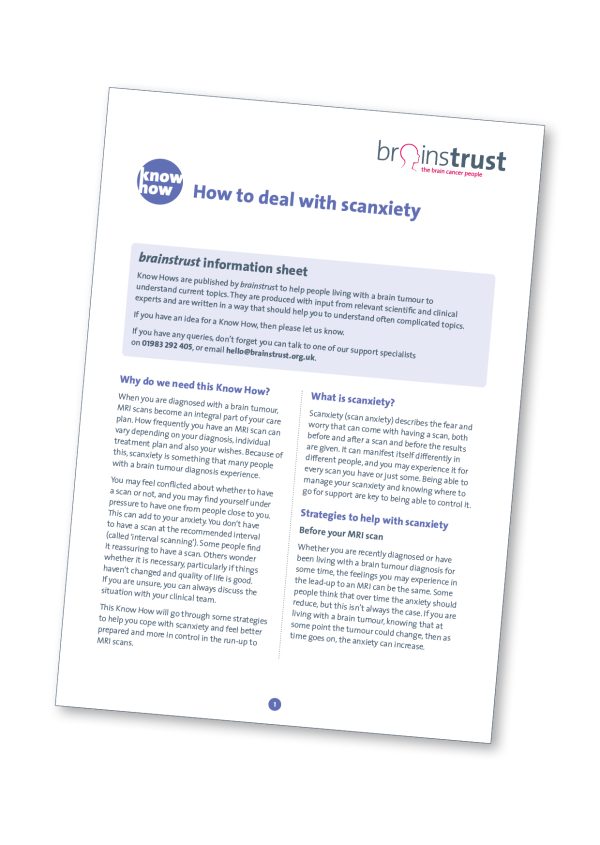
How to deal with scanxiety

When you are diagnosed with a brain tumour, MRI scans become an integral part of your care plan. Because of this, scanxiety – fear and nerves around both the scan and the results – is something that many people with a brain tumour diagnosis experience.

This Know How will go through some strategies to help you cope with scanxiety and feel better prepared and more in control in the run-up to MRI scans.

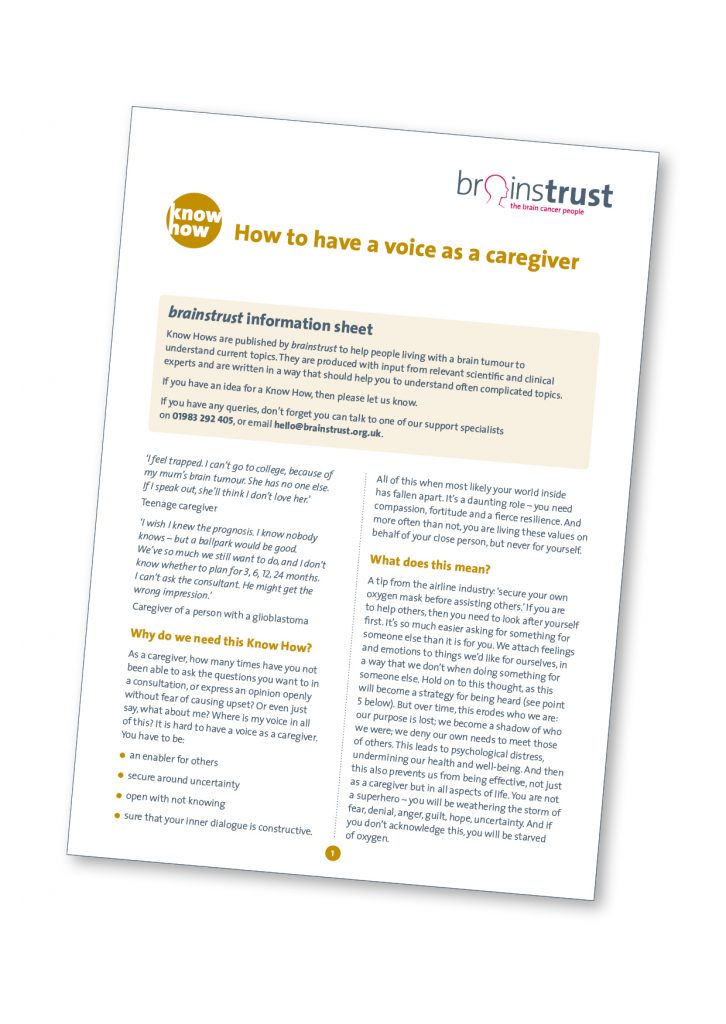
How to have a voice as a caregiver

Being a caregiver is a daunting role – you need compassion, fortitude and fierce resilience. And more often than not, you are living these values on behalf of your close person, but never for yourself.

This Know How will help you find your voice as a caregiver of someone with a brain tumour.

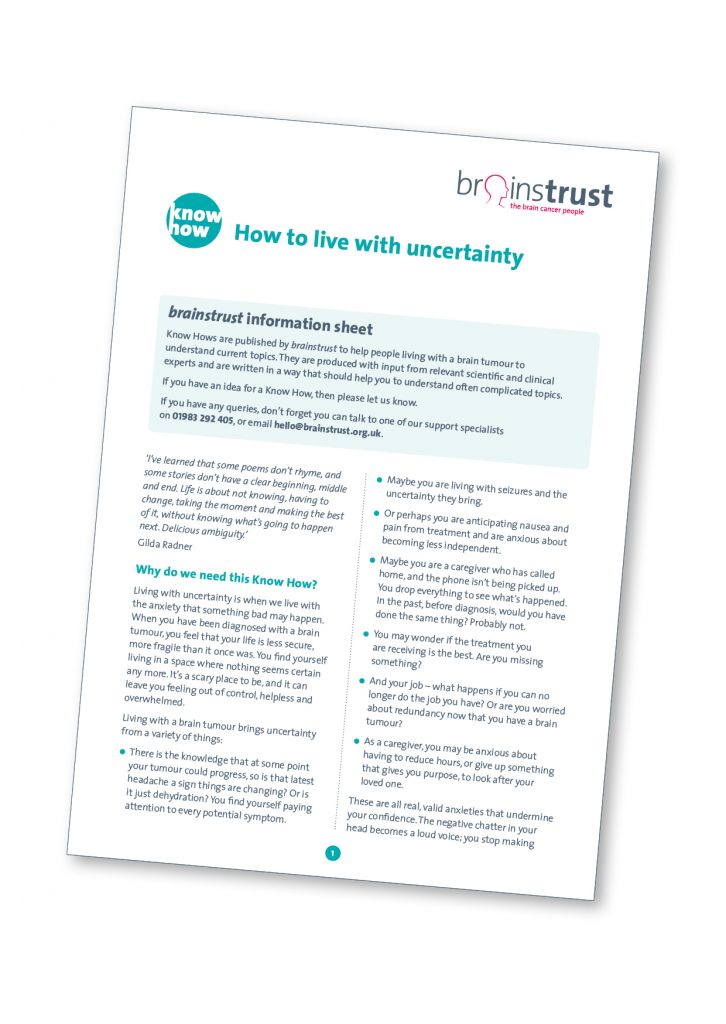
How to live with uncertainty

When you have been diagnosed with a brain tumour, you feel that your life is less secure, more fragile than it once was. You find yourself living in a space where nothing seems certain anymore. It’s a scary place to be, and it can leave you feeling out of control and overwhelmed.

This Know How will help you get comfortable with living with uncertainty.

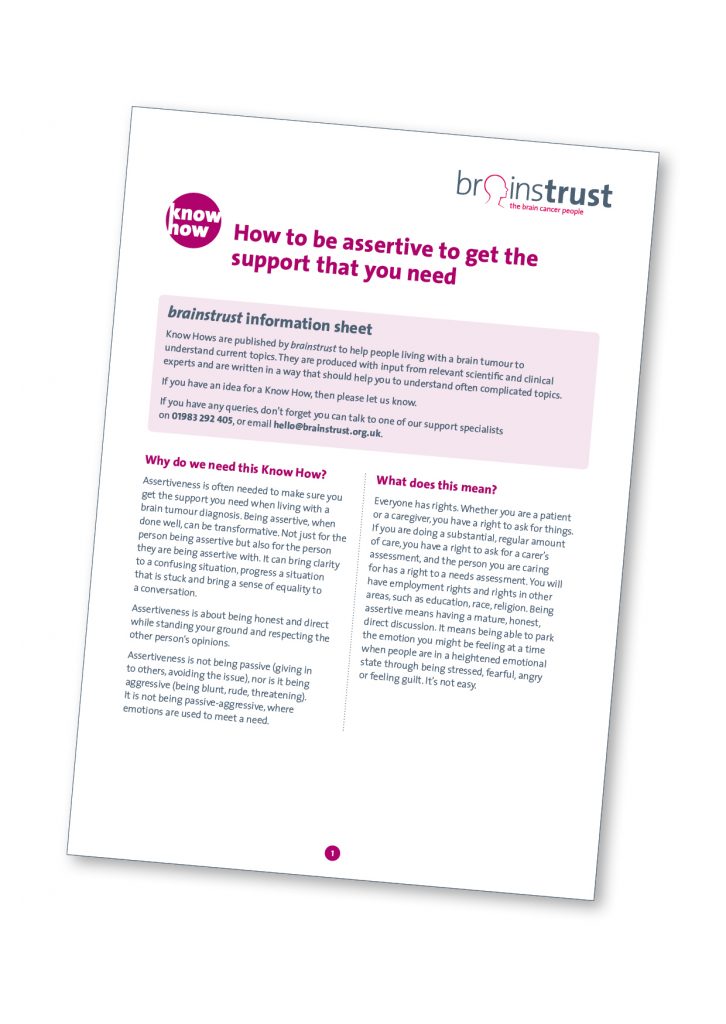
How to be assertive

Assertiveness is often needed to make sure you get the support you need when living with a brain tumour diagnosis. Being assertive, when done well, can be transformative. It can bring clarity to a confusing situation, progress a situation that is stuck and bring a sense of equality to a conversation.

This Know How will help you use assertiveness to get the support that you need.

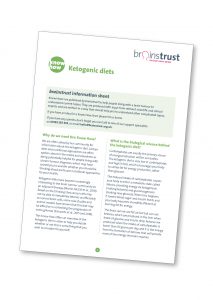
Ketogenic diets

Certain diets and nutritional approaches are often spoken about in the media and elsewhere as being potentially helpful for people living with a brain tumour diagnosis, which may have caused you to wonder whether you should be thinking about particular nutritional approaches for your health.

This Know How offers an overview of the ketogenic diet in order to help you decide whether this is something that you wish to consider for yourself.

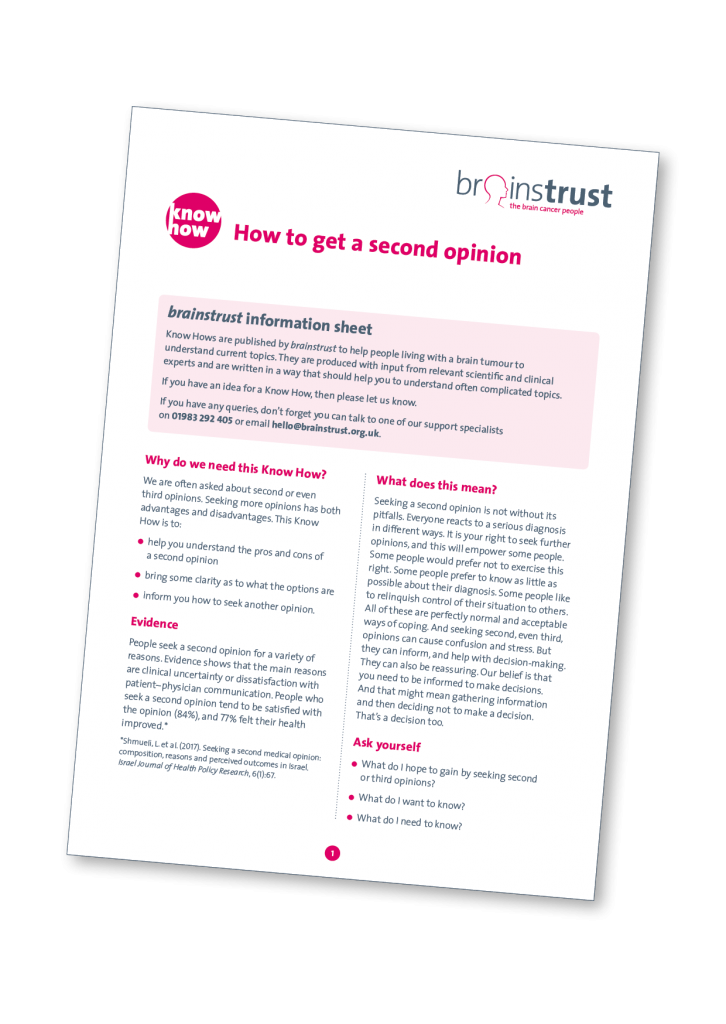
How to get a second opinion

We are often asked about second or even third opinions. Seeking more opinions has both advantages and disadvantages. This Know How has been designed to help you understand the pros and cons of a second opinion, bring some clarity as to what the options are and inform you how to go about seeking another opinion.

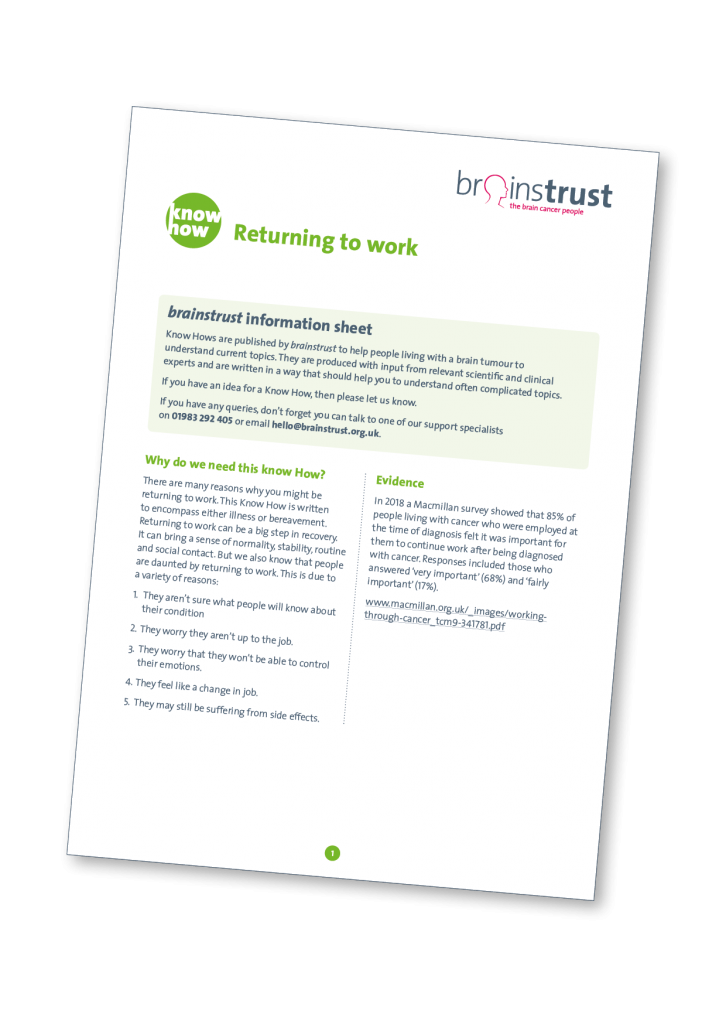
Returning to work

Returning to work can be a big step in recovery. It can bring a sense of normality, stability, routine and social contact. But we also know that it can be very daunting. This Know How will help you to prepare for returning to work, understand what help is available to you.

It has been written to encompass returning to work after bereavement as well as illness.

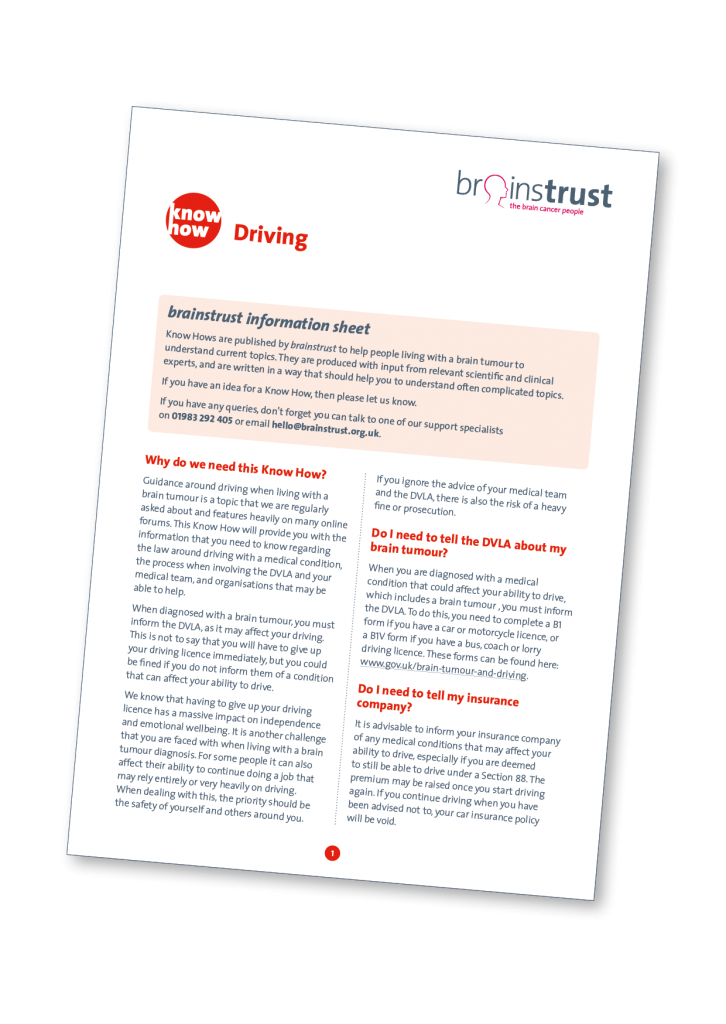
Driving

We know that you have lots of questions about the impact your diagnosis will have on your ability to drive. If you need to give up your driving license, this has a massive impact on your independence and well-being.

This latest Brain tumour Know How covers everything from telling your insurance provider, how long it might be until you can drive again to ways to manage the loss of your license.

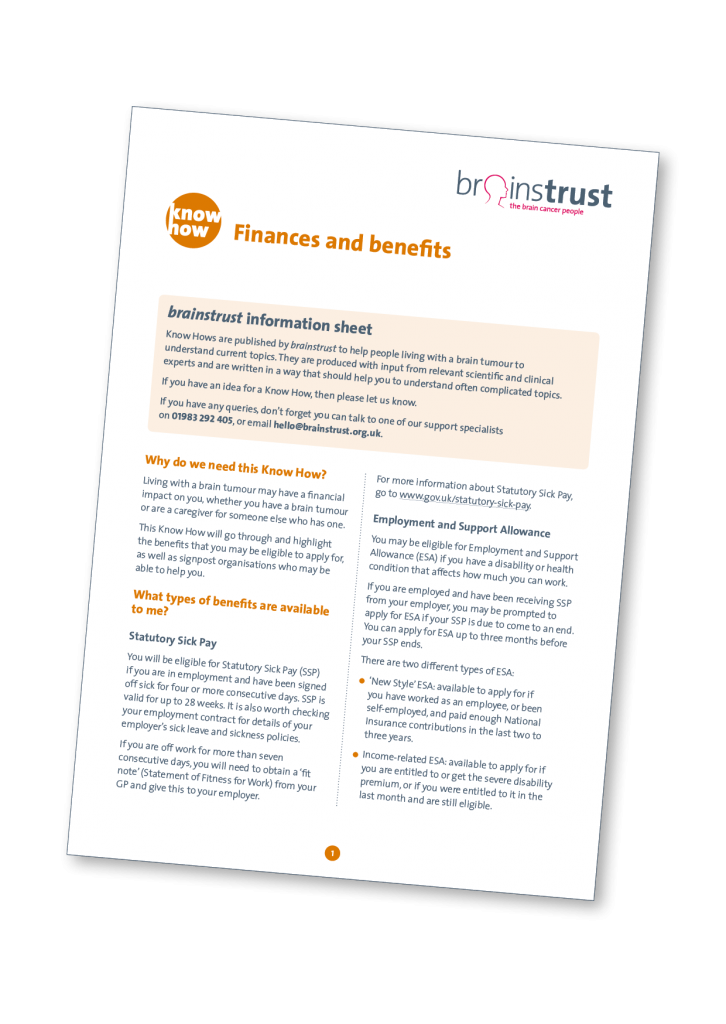
Finances and benefits

No longer being able to work, new and expensive mobility requirements, having to travel long distances to get to hospital – whatever the reasons for you, having a brain tumour can be a huge financial strain.

The latest Brain tumour Know How covers finances and benefits that could support you and your family when one of you has a brain tumour.

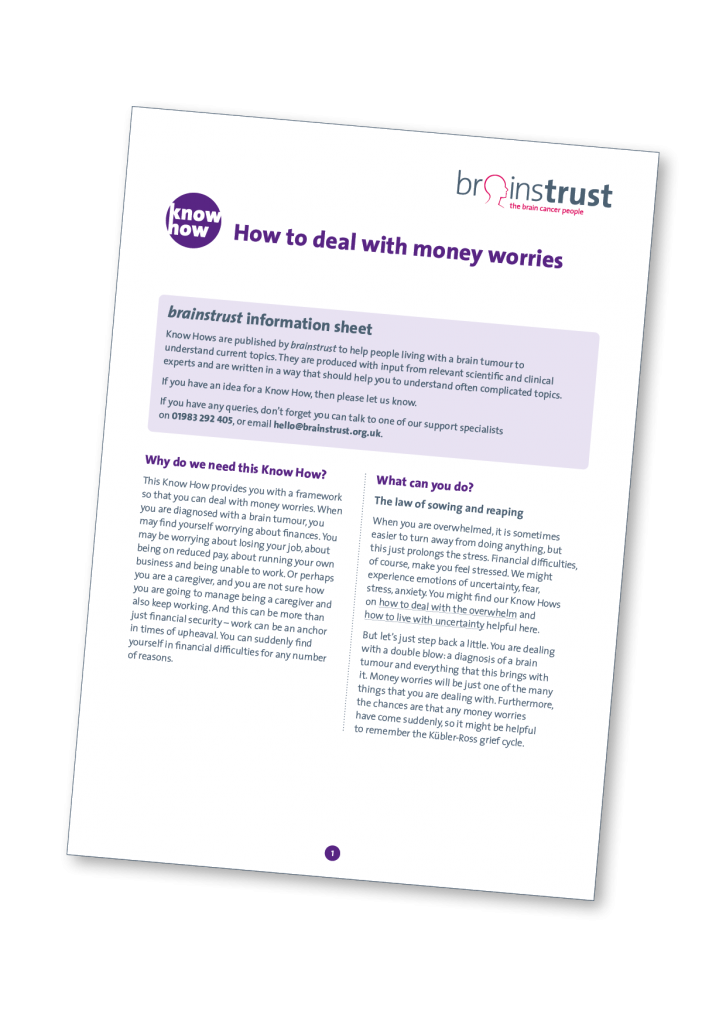
Money worries

When you are diagnosed with a brain tumour, you may find yourself worrying about finances. You may be worrying about losing your job, about being on reduced pay, about running your own business and being unable to work. Or perhaps you are a caregiver, and you are not sure how you are going to manage being a caregiver and also keep working.  You can suddenly find yourself in financial difficulties for any number of reasons.

This Know How provides you with a framework so that you can deal with money worries.

How to get a caregivers assessment

Under the Care Act 2014 everybody who is caring for someone over the age of 18 with a medical condition or disability is entitled to these assessments. We have produced a Know How which will explain more about carer’s assessments, what they and how you can get one.

The brain box

The brainstrust brain box is a must have support toolkit for people with a new brain tumour diagnosis and their caregivers. Fully customisable, with resources relevant to your unique situation, the brain box also comes with treats like teabags and self-care items to remind you to take time to look after yourself.

Patient guide – follow up

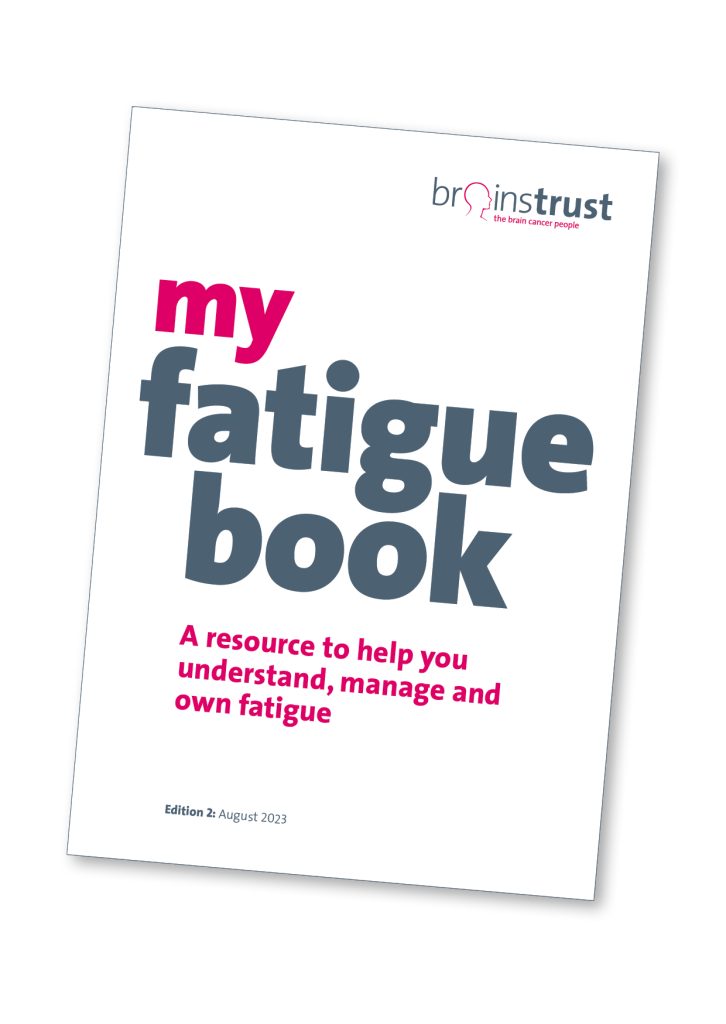
My fatigue book

This resource is really important as it enables patients and caregivers living with a brain tumour to understand what is meant by fatigue and to self-manage brain cancer related fatigue.

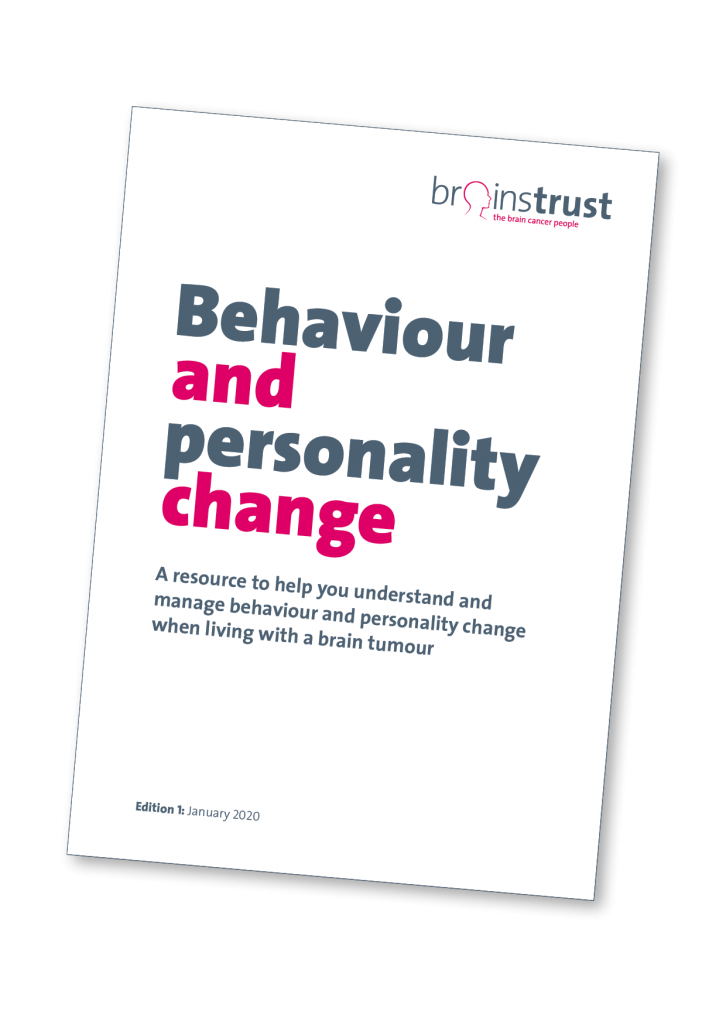
Behaviour and personality change (BPC)

Up to 60% of people diagnosed with a brain tumour experience BPC, and until now there has little support available for this.

Living well with a brain tumour

A brain tumour diagnosis impacts many areas of our lives and brings with it complex challenges. Things may never be the same as they were before, but brainstrust can help you to live well with a brain tumour, so you can have your best possible day – whatever that looks like for you.

Helping you navigate welfare and benefits

When you or someone close to you is diagnosed with a brain tumour, you may find yourself worrying about finances. You may be worried about reduced pay, running your business or having to make the decision to stop working. Being in this space can be overwhelming, especially when you are already dealing with so much. It is at these times that having the right support in place is transformative.

You can join the brain tumour community
on Facebook too

Practical help

You need to know what the best course of action is. Here you’ll find a one stop shop for brain tumour support.

Hypnotherapy

When you are living with a brain tumour, or are caring for someone living with a brain tumour, you may find hypnotherapy useful in improving wellbeing in the following areas:

  • Anxiety and stress
  • Diet and lifestyle
  • Resilience, self esteem and confidence
  • Pre and post-operative care
  • Pain management
  • Reduction of side effects from treatment such as nausea, fatigue

Scanxiety

When you are diagnosed with a brain tumour, MRI scans become an integral part of your care plan. Because of this, scanxiety – fear and nerves around both the scan and the results – is something that many people with a brain tumour diagnosis experience.

Latest events

On top of things, not overwhelmed.
Regain control.

Just been diagnosed with a brain tumour? Want to find out more about brain tumours? Maybe you would like to offer support, or find out the latest brain cancer news. Whatever the reason, we’d love to hear from you.

Call or email us to get in touch today

Subscribe to our mailing list to hear about all the latest news, events, research and resources

Fields marked with an * are required