Diagnosis
Nothing can really prepare you for the news that you or someone you love has been diagnosed with a brain tumour. On this page, you will find resources and information that can help you to find out what you need to know following a new diagnosis of a brain tumour and the support that is available to you.
Brain tumour symptoms and diagnosis
Because there are so many different types of brain tumour, there are a number of brain tumour symptoms and signs, depending on the nature of the brain tumour and where it is.
These may be very severe, or may not be apparent at all. So, it is a very broad spectrum with which we are dealing. Please remember this if you haven’t been diagnosed with a brain tumour. It is a rare condition and having a headache for more than a week does not mean that you necessarily have a brain tumour.
Brain tumour clinical trials
Find information on what brain tumour clinical trials are, how they are designed to run, how you might join a trial and what some of the benefits and risks might be.
Taking control
If you’ve been diagnosed with a brain tumour, or someone close to you has, you’ve entered a new world. Suddenly you’re a ‘patient’ or a ‘caregiver’ – neither are roles which you’ve chosen, or for which you are trained. You’ve been flung into uncertainty so that making good decisions about what next becomes instantly more difficult. The world has become a different, unfamiliar and scary place and you can feel totally out of control.
Know Hows
When living with a brain tumour diagnosis, lots of things can suddenly feel like they are out of our control and it can be difficult to know where to turn and what to focus on. These Know Hows cover a range of topics designed to help you take control of what is happening at the moment and develop strategies to help you to find a way forward.
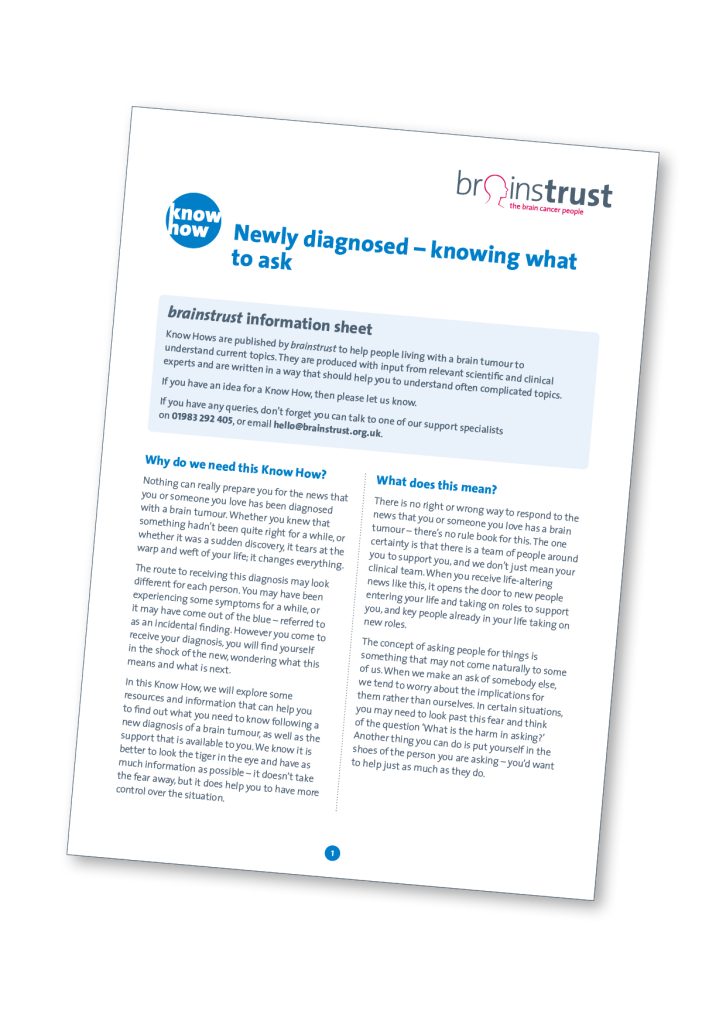
Newly diagnosed- knowing what to ask
Nothing can really prepare you for the news that you or someone you love has been diagnosed with a brain tumour.
In this Know How, we will explore some resources and information that can help you to find out what you need to know following a new diagnosis of a brain tumour and the support that is available to you.
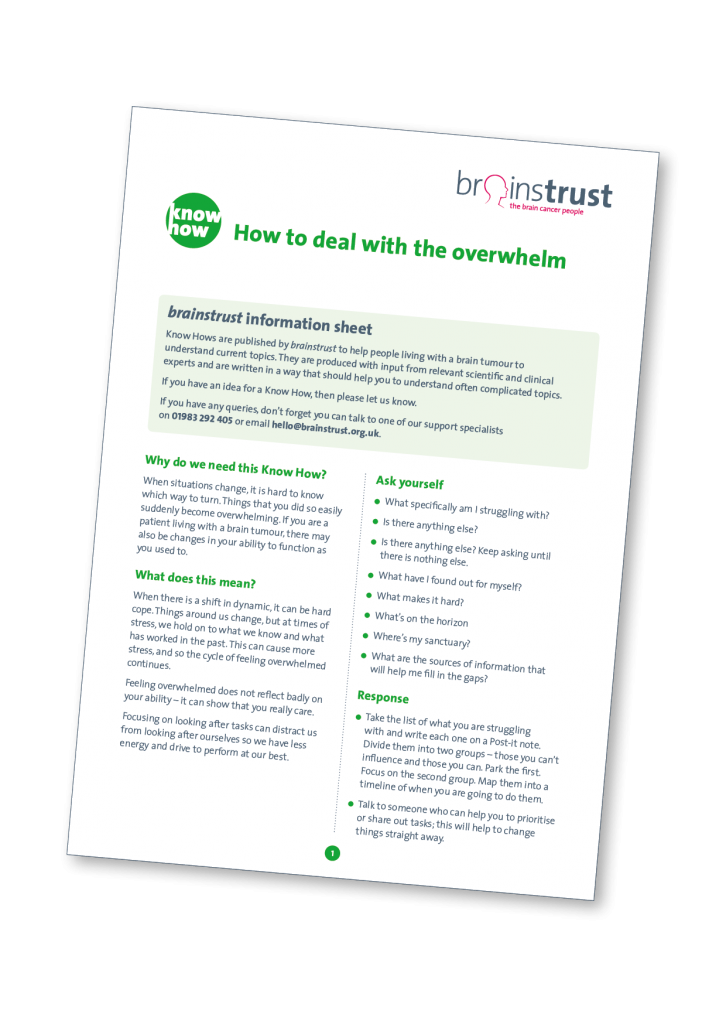
Dealing with the overwhelm
When situations change, it is hard to know which way to turn. Things that you did so easily suddenly become overwhelming. If you are a person living with a brain tumour, there may also be changes in your ability to function as you used to. Some things are within your power to change. Some are not. This Know How is designed to help you understand the difference, and prioritise the things that you can have an impact on.
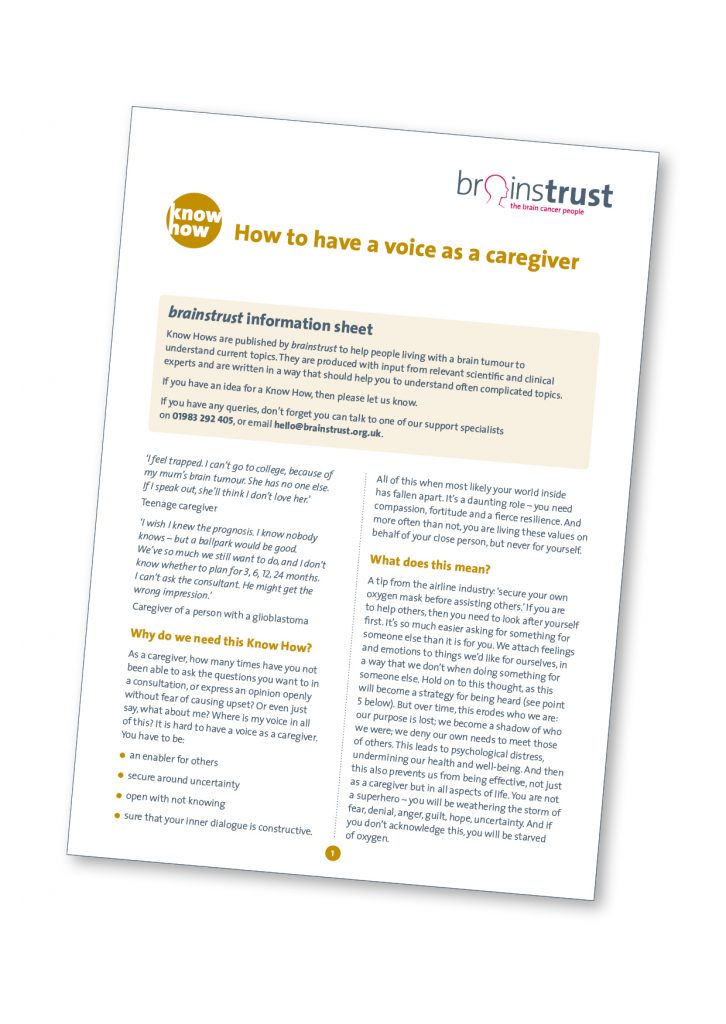
How to have a voice as a caregiver
Being a caregiver is a daunting role – you need compassion, fortitude and fierce resilience. And more often than not, you are living these values on behalf of your close person, but never for yourself.
This Know How will help you find your voice as a caregiver of someone with a brain tumour.
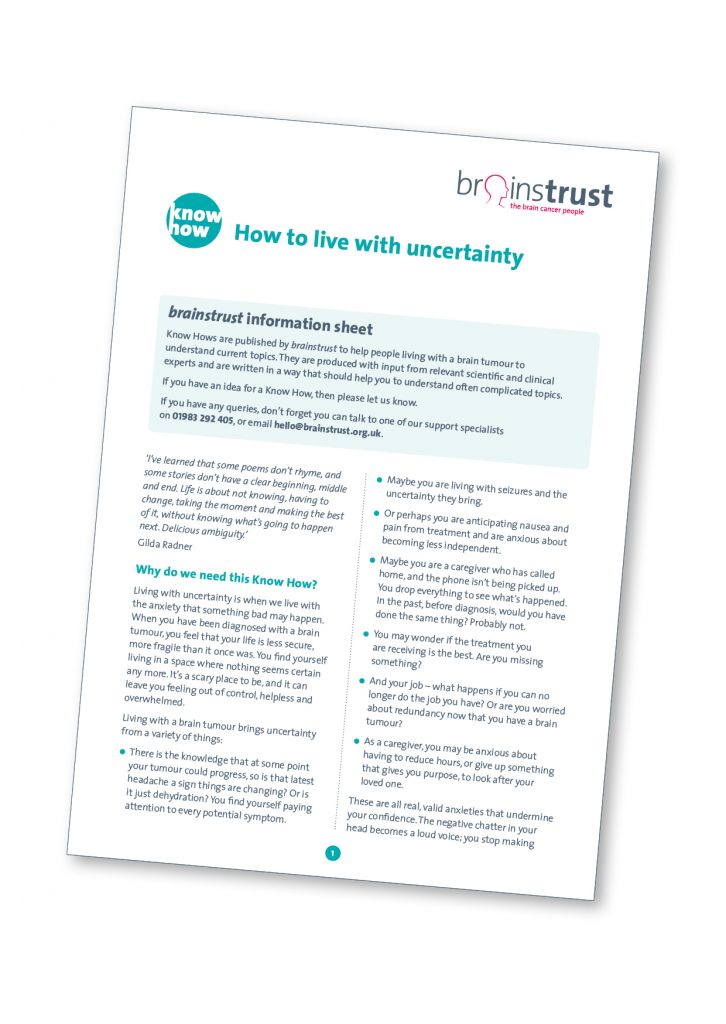
How to live with uncertainty
When you have been diagnosed with a brain tumour, you feel that your life is less secure, more fragile than it once was. You find yourself living in a space where nothing seems certain anymore. It’s a scary place to be, and it can leave you feeling out of control and overwhelmed.
This Know How will help you get comfortable with living with uncertainty.
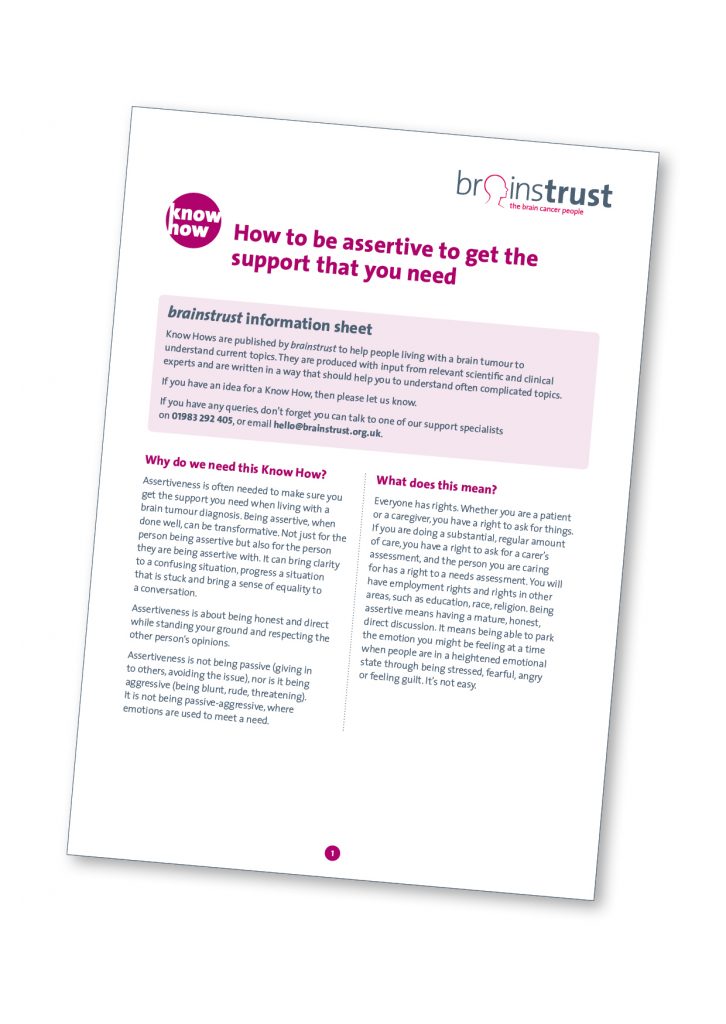
How to be assertive
Assertiveness is often needed to make sure you get the support you need when living with a brain tumour diagnosis. Being assertive, when done well, can be transformative. It can bring clarity to a confusing situation, progress a situation that is stuck and bring a sense of equality to a conversation.
This Know How will help you use assertiveness to get the support that you need.
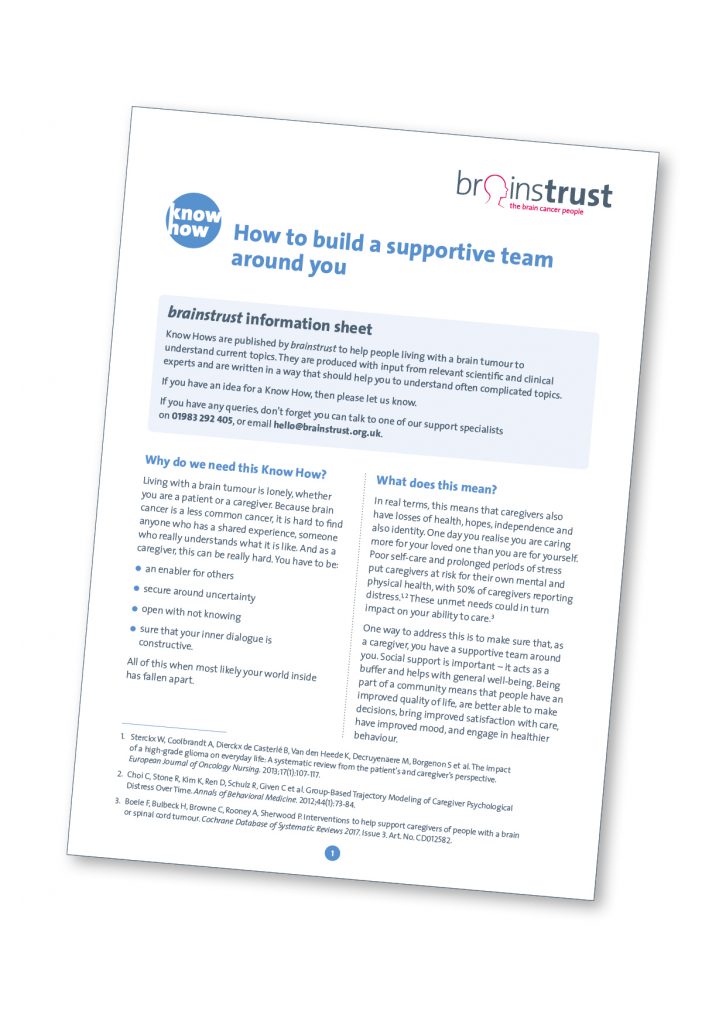
How to build a supportive team around you
Because brain cancer is a less common cancer, it is hard to find anyone who has a shared experience, someone who really understands what it is like. And as a caregiver, this can be really hard. One way to address this is to make sure that, as a caregiver, you have a supportive team around you. Social support is important – it acts as a buffer and helps with general well-being.
This Know How will help you build a supportive team so you can cope better when a loved one has a brain tumour.
How to prepare for medical appointments
When you are living with a brain tumour diagnosis, this can mean that you will have regular medical appointments and check-ups at any stage of the pathway. They are a key part of your clinical care and are where you will get key information about your condition and treatment plan.
This Know How will help you to prepare for your medical appointments through different tips and strategies.
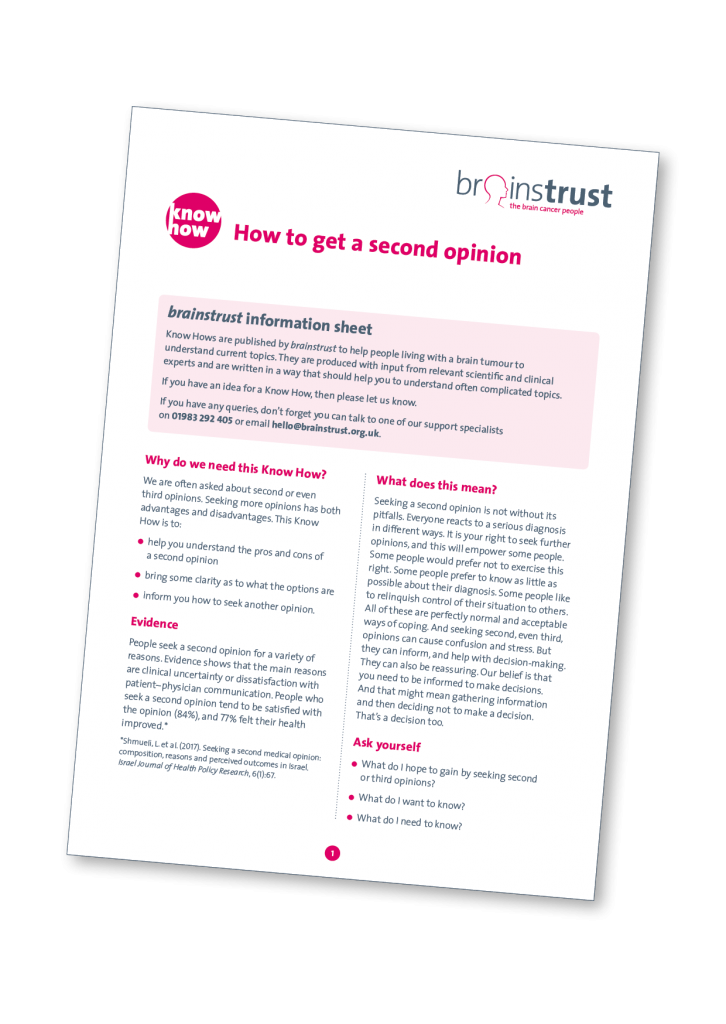
How to get a second opinion
We are often asked about second or even third opinions. Seeking more opinions has both advantages and disadvantages. This Know How has been designed to help you understand the pros and cons of a second opinion, bring some clarity as to what the options are and inform you how to go about seeking another opinion.
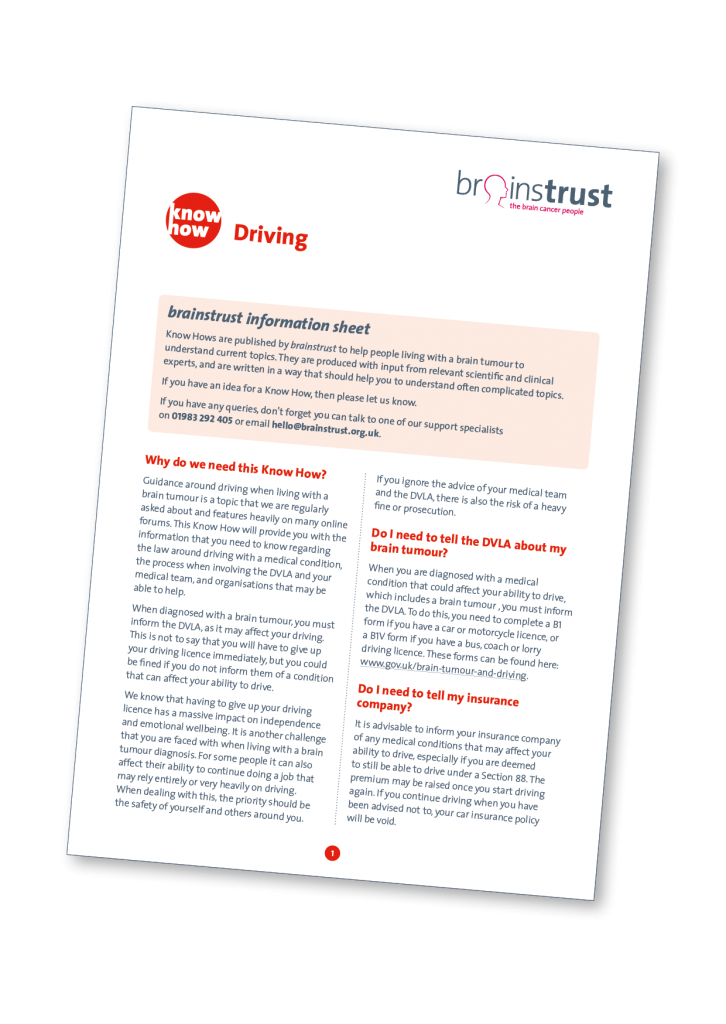
Driving
We know that you have lots of questions about the impact your diagnosis will have on your ability to drive. If you need to give up your driving license, this has a massive impact on your independence and well-being.
This latest Brain tumour Know How covers everything from telling your insurance provider, how long it might be until you can drive again to ways to manage the loss of your license.
Reliable websites
Access to the internet at the tips of our fingers has made getting hold of information quicker and easier than ever, but how can you know what sources to trust? Misinformation spreads fast online, and is sometimes shared by people with a large following.
This Know How will help you to understand what reliable websites look like, establish fact from fiction online and stop feeling overwhelmed by the volume of information available.
Finances and benefits
No longer being able to work, new and expensive mobility requirements, having to travel long distances to get to hospital – whatever the reasons for you, having a brain tumour can be a huge financial strain.
The latest Brain tumour Know How covers finances and benefits that could support you and your family when one of you has a brain tumour.
Money worries
When you are diagnosed with a brain tumour, you may find yourself worrying about finances. You may be worrying about losing your job, about being on reduced pay, about running your own business and being unable to work. Or perhaps you are a caregiver, and you are not sure how you are going to manage being a caregiver and also keep working. You can suddenly find yourself in financial difficulties for any number of reasons.
This Know How provides you with a framework so that you can deal with money worries.
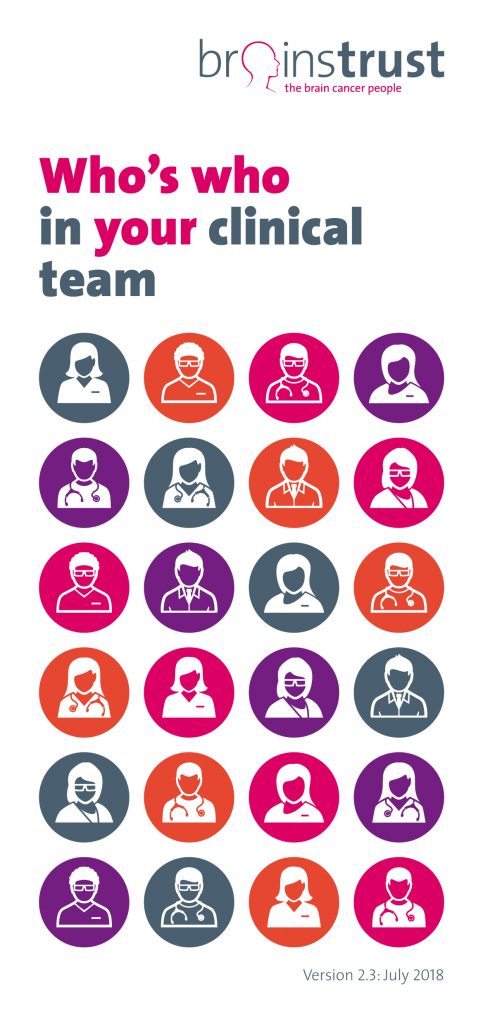
Who’s who in your clinical team
We have produced our ‘Who’s who in your clinical team‘ guide to help you navigate your pathway and keep a track of essential contacts you need within your clinical team.
The brain box
The brainstrust brain box is a must have support toolkit for people with a new brain tumour diagnosis and their caregivers. Fully customisable, with resources relevant to your unique situation, the brain box also comes with treats like teabags and self-care items to remind you to take time to look after yourself.
Patient guide – receiving diagnosis after biopsy
Patient guide – diagnosis
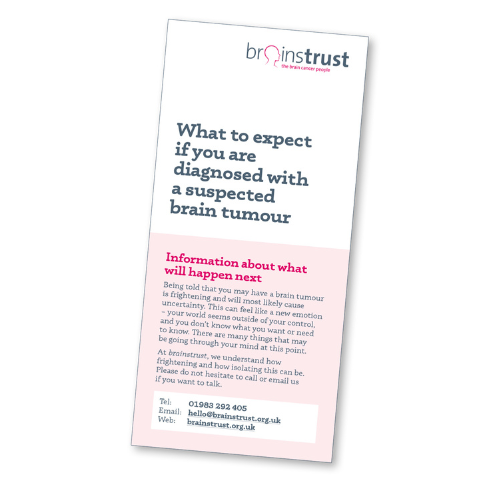
What to expect if you are diagnosed with a suspected brain tumour
This leaflet will help you to cope with the fear and uncertainty of a suspected brain tumour. It explains what you can expect to happen next, so you can feel more informed and more in control after your scans.
How to have conversations that count
We know how hard it is, explaining brain cancer, and having to hold those difficult conversations. This guide helps families with approaching these moments, so that you can hold better conversations and feel more in control. We also have a resource tailored to family members who need to talk to children about their brain surgery.
You can join the brain tumour community on Facebook too
Hypnotherapy
When you are living with a brain tumour, or are caring for someone living with a brain tumour, you may find hypnotherapy useful in improving wellbeing in the following areas:
- Anxiety and stress
- Diet and lifestyle
- Resilience, self esteem and confidence
- Pre and post-operative care
- Pain management
- Reduction of side effects from treatment such as nausea, fatigue
On top of things, not overwhelmed. Regain control.
Just been diagnosed with a brain tumour? Want to find out more about brain tumours? Maybe you would like to offer support, or find out the latest brain cancer news. Whatever the reason, we’d love to hear from you.
Practical help
You need to know what the best course of action is. Here you’ll find a one stop shop for brain tumour support.